



 中文简体
中文简体 日本語
日本語 English
 русский
 Español
 Français
 বাংলা
বাংলা 한국어
한국어 Latine
 Tiếng Việt
 عربى
عربى ไทย
ไทย Hrvatski
 dansk
dansk čeština
 Pilipino
 Nederlands
 Deutsch
 Suomalainen
 Magyar
 Indonesia
 فارسی
فارسی Bahasa Melayu
 italiano
 norsk
norsk Português
 Gaeilge
 Polskie
 Română
 svenska
 Slovák
 Türk
Türk
15 Questions Buyers Ask Before Choosing a Toothbrush Supplier

Buletedan has helped thousands of companies around the world achieve the production of quality products through our professional manufacturing solutions.


Content
- 1 Toothbrush Market Snapshot (2025–2034)
- 2 1. What certifications should a toothbrush supplier hold?
- 3 2. What are the typical minimum order quantities (MOQs) for OEM toothbrush orders?
- 4 3. How long does it take to manufacture custom toothbrushes?
- 5 4. What bristle materials are available, and how do they compare?
- 6 5. How do I verify a toothbrush supplier's quality control?
- 7 6. What is the cost breakdown for manufacturing a toothbrush?
- 8 7. Can the supplier handle custom packaging and branding?
- 9 8. What sustainable / eco-friendly toothbrush options are available?
- 10 9. What is the supplier's production capacity and scalability?
- 11 10. How do different toothbrush types compare in market share?
- 12 11. What raw materials are used, and where do they come from?
- 13 12. Does the supplier offer R&D and innovation support?
- 14 13. How often should toothbrushes be replaced—and why does it matter for suppliers?
- 15 14. What logistics and shipping considerations should I know?
- 16 15. How do I evaluate the supplier's long-term partnership potential?
- 17 Frequently Asked Questions
The global toothbrush market was valued at USD 8.49 billion in 2025 and is projected to reach USD 16.27 billion by 2034, growing at a CAGR of 7.63%. Asia Pacific led with a 34.72% share in 2025, driven by aging populations in China, India, and Japan. With this rapid expansion, procurement professionals face mounting pressure to select the right toothbrush supplier—one that balances cost, quality, compliance, and innovation.
This guide answers the 15 most critical questions buyers ask before committing to a toothbrush manufacturing partner. Each answer delivers direct, actionable insights backed by the latest industry benchmarks and real-world data.
Toothbrush Market Snapshot (2025–2034)
Manual toothbrushes held 79.23% of the market in 2026, while electric models are the fastest-growing segment.
1. What certifications should a toothbrush supplier hold?
Direct answer: ISO 13485 (medical devices), FDA registration (US), CE marking (EU), and RoHS compliance are non-negotiable for reputable toothbrush suppliers.
Beyond these, buyers should verify ISO 9001 for quality management systems and request third-party lab reports (SGS, Intertek, TÜV) that confirm bristle tensile strength, abrasion resistance, and toxicology screening for heavy metals and phthalates. The ISO 20126:2022 standard specifies requirements and test methods for manual toothbrushes to promote safety for their intended use. Suppliers that maintain current certification portfolios demonstrate commitment to regulatory compliance and consumer trust.
- ISO 13485 – Critical for medical-grade oral care devices
- FDA Registration – Required for US market entry; verify via FDA database
- CE Marking / EU MDR – Essential for European distribution
- RoHS & REACH – Restricted hazardous substances compliance
Suppliers with documented on-time delivery rates above 95% and reorder rates exceeding 20% are statistically more reliable partners.
2. What are the typical minimum order quantities (MOQs) for OEM toothbrush orders?
Direct answer: For OEM manual toothbrushes with custom logos and packaging, the standard minimum order quantity (MOQ) is 20000 standard boxes per cone color. More flexible MOQs are available for long-term partners.
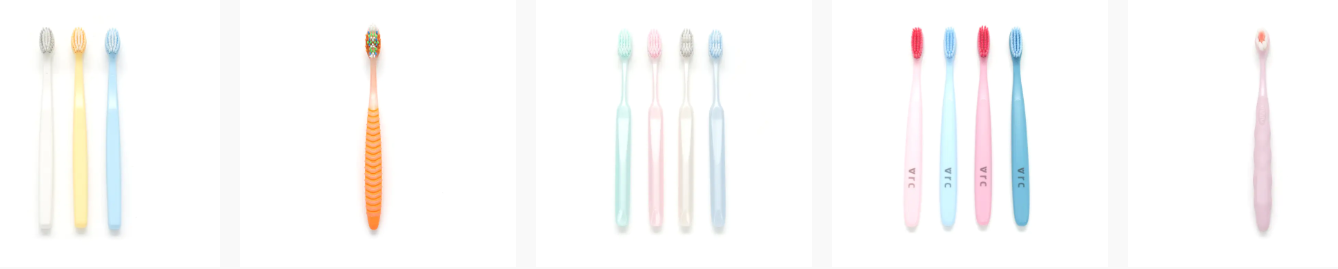
Tip: Always negotiate MOQ flexibility during initial discussions. Suppliers with in-house mold manufacturing can often reduce MOQs for repeat clients.
3. How long does it take to manufacture custom toothbrushes?
Direct answer: A standard OEM toothbrush project takes 12–16 weeks (84–112 days) from initial inquiry to warehouse delivery.
The timeline breaks down into four phases:
- Inquiry & Factory Selection – Weeks 1–2
- Sample & Prototype Development – Weeks 3–8 (custom samples: 5–10 days; new molds: 15–20 days)
- Mass Production – Weeks 9–12 (15–20 working days after sample approval)
- Shipping & Clearance – Weeks 13–16
For fully customized OEM electric toothbrushes, lead time is typically 35–45 days: 5–7 days for design confirmation, 25–30 days for production, and 3–5 days for quality inspection and packaging. Suppliers with vertical integration—handling mold design, injection molding, bristle tufting, and packaging in-house—can reduce lead times by 30–50% compared to non-specialized regions.
4. What bristle materials are available, and how do they compare?
Direct answer: Nylon remains the industry standard (durable, effective), but bio-based alternatives—castor oil-derived Nylon 1010 and Nylon 4—offer improved biodegradability.
Silicone bristles are more sustainable than nylon in all 18 impact categories, with average reductions of 14%. However, nylon-6 remains the most widely used due to cost and performance. Plant-based bristles (castor oil nylon) have a lower carbon footprint than petroleum-based nylon but are still not compostable under normal conditions. Nylon-bristled toothbrushes exhibit statistically significantly better bristle end morphology compared to plant-based bio-bristled bamboo toothbrushes.
Soft bristles account for 57.48% of the market, suitable for all age groups including children and the elderly. Medium bristles are preferred by adults with firmer gums.
5. How do I verify a toothbrush supplier's quality control?
Direct answer: Demand transparency on multi-stage QC processes—raw material inspection, in-process monitoring, and final batch testing with third-party lab reports.
Reputable toothbrush suppliers implement AQL (Acceptable Quality Limit) statistical sampling to test random brush heads, often paired with automated systems for deeper defect analysis. Key QC checkpoints include:
- Bristle length measurement and cutting – Ensures consistent tufting
- Bristle end-rounding – Critical for gum safety; tipped filaments inspection
- Durability testing – Simulates 3–6 months of use
- Defect inspection – Bent bristles, uneven tufting, handle defects
Always request: First-Article Inspection (FAI) reports, batch test records, and allow pre-shipment inspections through agencies like SGS, Intertek, or TÜV. Suppliers with on-site QC laboratories and documented ISO 20126 compliance demonstrate superior quality management.
6. What is the cost breakdown for manufacturing a toothbrush?
Direct answer: Raw materials—particularly plastic (PP/PE)—account for approximately 60–70% of total operating expenses (OpEx).
The variable cost of producing a single toothbrush unit is approximately $1.00, encompassing handle material, nylon fiber bristles, manufacturing labor, energy, and packaging. Gross profit margins in toothbrush manufacturing typically range between 35–45%, with net profit margins of 18–25%.
Eliminating only the brush head instead of the entire toothbrush could result in savings of 4.69 × 10⁻³ kg CO₂ eq per toothbrush—a factor increasingly relevant for sustainability-focused brands.
7. Can the supplier handle custom packaging and branding?
Direct answer: Yes—leading toothbrush suppliers offer complete packaging customization, from recyclable boxes and blister cards to FSC-certified cartons with foil stamping, hang tabs, and die-cutting.
Customization options include:
- Structure & Material – Rigid boxes, window sleeves, molded pulp trays, OPP bags
- Printing & Finishing – Embossed logos, foil stamping, aqueous coating
- Sustainability – FSC-certified paper, biodegradable pulp trays, plastic-free alternatives
- Retail Readiness – Hang tabs, euro slots, display-ready configurations
Packaging sustainability is accelerating: One major retailer's switch to paper packaging for toothbrushes is expected to eliminate 25.3 tons of plastic annually. Buyers should prioritize suppliers offering eco-certified packaging that aligns with evolving regulatory mandates and consumer expectations.
8. What sustainable / eco-friendly toothbrush options are available?
Direct answer: Bamboo handles, biodegradable bristles (Nylon 4, castor-oil Nylon 1010), and compostable packaging are the leading sustainable toothbrush solutions.
The global bamboo toothbrush market was valued at $40.58 million in 2025 and is projected to reach $83.74 million by 2032 at a CAGR of 10.9%. Biodegradable toothbrush production reached 73 million units in 2025, with an average selling price of $1.04 per unit. However, buyers should note that most "plant-based" bristles are chemically processed into Nylon 11—a plastic that behaves exactly like conventional nylon and is not compostable.
True compostable toothbrushes require boar or horsehair bristles—which are less effective at plaque removal than nylon and can retain moisture leading to bacterial buildup. Buyers should evaluate the trade-offs between sustainability claims and functional performance.
9. What is the supplier's production capacity and scalability?
Direct answer: Top-tier toothbrush manufacturing plants typically operate with annual production capacities between 10–50 million units.
When evaluating capacity, buyers should assess:
- Factory size – Facilities exceeding 16,000 m² are better equipped for high-volume orders
- Workforce & automation – Automated injection molding and tufting lines enable consistent quality at scale
- Reorder rates – A 22% reorder rate indicates strong client retention
- Flexibility – Can the supplier handle both small-batch (500–1,000 units) and million-unit orders?
China's manufacturing clusters—Guangdong (smart/electric), Zhejiang (precision molding), and Jiangxi (mid-volume)—offer specialized capacity advantages. Vertical integration in these regions reduces lead times by 30–50% compared to non-specialized areas.
Direct answer: Manual toothbrushes dominate with 79.23% market share in 2026, while electric toothbrushes are the fastest-growing segment.
| Product Type | Market Share | Projected CAGR |
|---|---|---|
| Manual | 79.23% | 3.7% |
| Electric | 20.77% | 6.18% |
| Smart/Connected | (included in Electric) | 7.5% |
Soft bristles account for 57.48% of the bristle-type market, followed by medium (approx. 30%) and firm (12.5%). Adults represent 64.70% of end-users, with children's toothbrushes growing rapidly due to gamified designs.
11. What raw materials are used, and where do they come from?
Direct answer: Handles are primarily PP (polypropylene) and PE (polyethylene)—petroleum-derived plastics—while bristles are nylon (also petroleum-based).
Key material inputs:
- Handle: PP/PE (60–70% of OpEx)
- Soft-grip components: TPE (thermoplastic elastomer) or TPU
- Bristles: Nylon-6 (standard), Nylon-4 (biodegradable), or castor-oil Nylon 1010
- Eco-alternatives: Bamboo, PLA/PBS bioplastics, recycled plastics
Material traceability is increasingly critical—buyers should request documentation on resin certificates, bamboo sourcing origin, and bristle manufacturing standards. Suppliers with full material chain visibility build greater trust with consumers and regulators.
12. Does the supplier offer R&D and innovation support?
Direct answer: Leading toothbrush suppliers provide full OEM/ODM support—from rapid prototyping and tooling to smart feature integration.
Key innovation capabilities to look for:
- In-house R&D – For smart hardware, firmware, Bluetooth connectivity
- Rapid prototyping – 3–7 days for blank samples; 7–10 days for customized prototypes
- Tooling ownership – Molds developed and maintained in-house reduce costs and lead times
- Material innovation – Compatibility with biodegradable materials, charcoal-infused bristles
Smart toothbrushes with AI feedback, pressure sensors, and bone conduction technology are driving premiumization. Suppliers with experience in connected devices can help brands capture the fast-growing smart segment (projected 7.5% CAGR).
13. How often should toothbrushes be replaced—and why does it matter for suppliers?
Direct answer: The American Dental Association recommends replacing toothbrushes every three months. However, effectiveness is compromised after just one month of use due to bristle wear.
This replacement cycle has profound implications for toothbrush suppliers:
- Subscription models – Quarterly replacement programs create recurring revenue
- Bristle durability – Suppliers must engineer bristles that maintain effectiveness for 3+ months
- Microbial contamination – Regular toothbrushes have almost 4 times more microbial contamination than bamboo brushes
For B2B buyers, this means partnering with suppliers who can deliver consistent quality across high-volume, recurring orders—and who understand the subscription economy that is reshaping the oral care industry.
14. What logistics and shipping considerations should I know?
Direct answer: Toothbrush suppliers in specialized manufacturing regions can reduce lead times by 30–50% through integrated logistics—from mold development to container loading.
Key logistics factors:
- Port proximity – Suppliers near Shenzhen, Guangzhou, or Shanghai ports offer faster, cheaper shipping
- Container consolidation – Can the supplier combine multiple SKUs in one shipment?
- Customs compliance – FDA prior notice, CE documentation, and country-specific labeling
- Insurance & Incoterms – Clarify FOB, CIF, or DDP terms upfront
Asia Pacific dominated the toothbrush market with $3.15 billion in 2026, driven by export-oriented manufacturing in China, India, and Japan. Buyers should prioritize suppliers with documented on-time delivery rates above 95%.
15. How do I evaluate the supplier's long-term partnership potential?
Direct answer: Look beyond price—evaluate communication responsiveness, reorder rates, investment in R&D, and willingness to co-invest in tooling and innovation.
Key indicators of a strong long-term partner:
- Communication speed – Top performers respond within one hour
- Reorder rates – >20% indicates strong client retention
- R&D investment – Suppliers with in-house design teams drive innovation
- Flexibility – Willingness to adjust MOQs, packaging, and materials as your brand evolves
- Transparency – Open sharing of QC reports, material certifications, and production timelines
Buletedan is trusted by more than 100 international oral care brands worldwide, providing professional manufacturing solutions from material procurement to mass production. With a commitment to quality, affordability, and innovation, Buletedan's mission is to serve people's oral health—because health brings beauty and confidence.
Frequently Asked Questions
Q1: How often should you replace a toothbrush?
Every 3 months per ADA recommendations. Replace sooner if bristles are frayed.
Q2: Are soft toothbrushes better?
Soft bristles (57.48% market share) are suitable for all ages and recommended by most dentists.
Q3: Can toothbrushes be recycled?
Most conventional toothbrushes are not recyclable. Some programs (e.g., Curacycle) collect and recycle oral care products.
Q4: What toothbrush do dentists recommend?
Dentists generally recommend soft-bristled toothbrushes with ADA Seal of Acceptance, replaced every 3 months.
Q5: What are toothbrush bristles made of?
Mostly nylon-6 (petroleum-based). Bio-based alternatives include Nylon 4, Nylon 1010 (castor oil), and silicone.
Q6: How are toothbrushes manufactured?
Injection molding (handles), filament extrusion, bristle cutting, tufting, trimming, end-rounding, cleaning, and packaging.
Q7: Are bamboo toothbrushes hygienic?
Bamboo has antimicrobial properties. However, bristles (usually nylon) must be removed before composting.
Q8: Can I customize toothbrush packaging?
Yes—options include FSC-certified cartons, blister cards, molded pulp trays, and OPP bags with custom printing.
Your email address will not be published. Required fields are marked *

+86-515-66660899
+86 13814347707





Copyright © Buletedan
OEM/DOM/JDM Dental Floss, Interdental Brushes, Toothbrush Company
