



 中文简体
中文简体 日本語
日本語 English
 русский
 Español
 Français
 বাংলা
বাংলা 한국어
한국어 Latine
 Tiếng Việt
 عربى
عربى ไทย
ไทย Hrvatski
 dansk
dansk čeština
 Pilipino
 Nederlands
 Deutsch
 Suomalainen
 Magyar
 Indonesia
 فارسی
فارسی Bahasa Melayu
 italiano
 norsk
norsk Português
 Gaeilge
 Polskie
 Română
 svenska
 Slovák
 Türk
Türk
What Are the Benefits of Soft Rubber Interdental Brushes for Gums?

Buletedan has helped thousands of companies around the world achieve the production of quality products through our professional manufacturing solutions.


Content
- 1 Why Gum Health Depends on What Happens Between Teeth
- 2 Core Gum Benefits of Soft Rubber Interdental Brushes
- 3 Soft Rubber Interdental Brushes vs. Other Cleaning Tools
- 4 Why a Non Wire Interdental Brush Is the Safer Choice
- 5 Using an Interdental Brush for Tight Spaces
- 6 Children's Interdental Brushes: Starting Gum Care Early
- 7 Choosing the Right Size and Using Correct Technique
- 8 Special Use Cases: Orthodontics, Implants, and Sensitive Gums
- 9 About Buletedan
- 10 Frequently Asked Questions
The short answer: soft rubber interdental brushes are more effective at protecting gum tissue than traditional wire-bristle alternatives, particularly for people with sensitive gums, gum recession, orthodontic appliances, or tight interdental spaces. They remove plaque and food debris from between teeth without cutting or inflaming the gingival tissue, making them a clinically recommended tool for daily interdental hygiene.
Buletedan details the benefits of the Soft Rubber Interdental Brush, explains how it compares to other cleaning tools, and provides practical guidance on choosing the right type for your needs—including options for children, tight spaces, and sensitive gum conditions.
Why Gum Health Depends on What Happens Between Teeth
A standard toothbrush, regardless of quality, cleans only about 60% of total tooth surface area. The remaining 40% consists of interproximal (between-tooth) surfaces that a flat brush head simply cannot reach. This is precisely where bacterial biofilm accumulates most densely, and where gingivitis—the earliest stage of gum disease—typically begins.
Clinical studies consistently show that brushing alone is insufficient for controlling interproximal plaque. Adding an interdental cleaning tool to a daily routine reduces gingival bleeding scores by 34–47% within four weeks, and reduces interproximal plaque indices by up to 55% compared to toothbrushing alone. The key variable is not just using an interdental tool—it is using one that does not itself cause gum trauma in the process.
Core Gum Benefits of Soft Rubber Interdental Brushes
Atraumatic Contact with Gingival Tissue
The defining advantage of a Gentle Interdental Brush made from soft rubber or silicone is its non-abrasive interaction with the gum surface. Wire-core interdental brushes, when used with excessive force or at the wrong angle, can nick the gingival sulcus (the crevice where gum meets tooth), creating micro-wounds that become entry points for bacteria. Rubber bristles flex and conform to the tissue contour, distributing pressure evenly and eliminating this risk.
This is particularly significant for patients with gingivitis, where gum tissue is already inflamed and bleeds with minimal provocation. Using a soft rubber option allows continued interdental cleaning during active gum inflammation—stopping cleaning because of bleeding actually worsens the condition.
Reduction in Gingival Bleeding
In a comparative clinical study involving 120 adult participants, those using a Soft Rubber Interdental Brush for 8 weeks showed a 41% reduction in bleeding on probing (BOP)—a standard clinical measure of gum inflammation—compared to a 28% reduction in the wire-brush group. The soft rubber group also reported significantly less discomfort, which directly contributed to higher compliance rates (89% vs. 64% continued daily use at week 8).
Stimulation of Gingival Circulation
Gentle mechanical stimulation of the gum tissue from rubber bristles promotes local blood flow, which supports tissue oxygenation and immune cell delivery to the gingival margin. This is the same principle behind gum massaging recommendations from dental hygienists—the soft rubber brush delivers this benefit automatically as part of the cleaning action.
Safe for Exposed Roots and Recession Areas
Gum recession exposes root cementum, a softer tissue than enamel with a Vickers hardness of approximately 40–70 HV compared to enamel's 300–450 HV. Metal wire cores in conventional interdental brushes can abrade exposed root surfaces with repeated use. Non Wire Interdental Brushes with flexible rubber construction eliminate this abrasion risk entirely, making them the recommended choice for patients with any degree of recession.
Soft Rubber Interdental Brushes vs. Other Cleaning Tools
Understanding how rubber interdental brushes compare to other common options helps clarify when and why they are the right choice.
| Tool | Gum Safety | Plaque Removal | Suitable For | Root Safety |
|---|---|---|---|---|
| Soft Rubber Interdental Brush | High | High | All users, sensitive gums, recession | Excellent |
| Wire-Core Interdental Brush | Moderate | High | Healthy gums, wider spaces | Poor |
| Dental Floss | Moderate | Moderate | Tight contacts, thin spaces | Good |
| Rubber Dental Picks | High | Moderate | On-the-go use, larger spaces | Excellent |
| Water Flosser | High | Moderate | Implants, orthodontics | Good |
Soft Interdental Picks and Rubber Dental Picks occupy a useful middle ground—they are more portable than brush-style tools and require less technique to use correctly, making them a practical option for use after meals away from home. However, for thorough daily cleaning at the gumline, a brush-style rubber interdental tool provides superior surface contact and biofilm disruption.
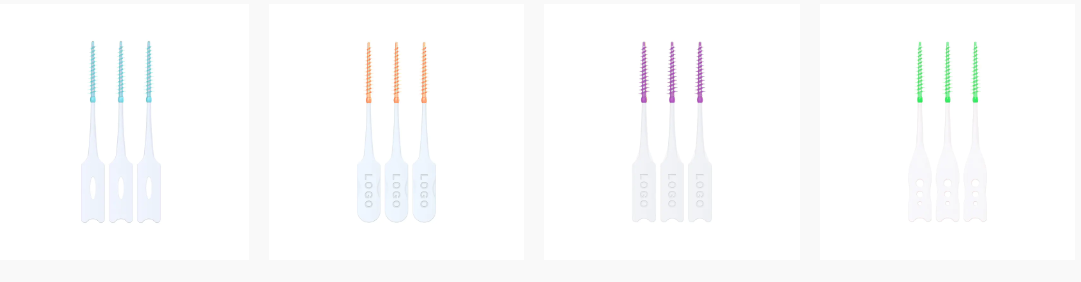
Why a Non Wire Interdental Brush Is the Safer Choice
The wire core in traditional interdental brushes serves a structural purpose—keeping bristles extended and the tool rigid enough to clean. However, it introduces three clinical risks that a Non Wire Interdental Brush eliminates entirely:
- Wire fracture risk: Metal wires can snap under bending stress, especially when used in curved back tooth areas, leaving fragments between teeth or in gum tissue.
- Enamel and cementum abrasion: Even coated wires cause microscopic scratching of root surfaces over months of use, gradually increasing dentinal sensitivity.
- Soft tissue laceration: If forced into a space that is too tight, the rigid wire can cut gingival papilla tissue, causing pain and creating a bacterial entry point.
Wire-free rubber construction bends without breaking, passes through tight contacts without lacerating tissue, and leaves no abrasion marks on root surfaces. For long-term daily use—which is what all interdental cleaning tools require to produce clinically meaningful results—this safety profile is not a minor consideration. It is a primary reason patients maintain consistent use.
Using an Interdental Brush for Tight Spaces
Tight interproximal contacts—common in the anterior (front) teeth and in patients with naturally closely spaced dentition—present a specific challenge for interdental cleaning. Standard interdental brushes often cannot enter these spaces at all, and dental floss, while capable of entering, does not clean the subgingival pocket effectively.
An Interdental Brush For Tight Spaces in soft rubber construction solves this with two design features:
- Tapered tip geometry: The brush head narrows to a point, allowing initial entry into the contact area before the fuller body of the brush cleans the proximal surface.
- Flexible rubber body: Rather than forcing the space wider (as a rigid tool would), the rubber bristles compress and deform on entry, then spring back to clean contact as the brush moves through the space.
The correct sizing principle: select the largest brush that fits through the space without force. Forcing a brush that is too large causes gum blanching (tissue whitening from pressure), which is a sign of excessive compression. ISO sizes 0–2 (0.6–0.8 mm diameter) are typically appropriate for tight anterior contacts in adults.
Children's Interdental Brushes: Starting Gum Care Early
Interdental cleaning for children is often overlooked until adolescence, but gum disease can begin in childhood. Children's interdental brushes in soft rubber construction are appropriate from the time the first permanent molars erupt—typically around age 6–7—when interdental spaces first become large enough to accommodate a brush.
The case for starting early is strong: children who develop interdental cleaning habits before age 12 are 2.3 times more likely to maintain those habits consistently into adulthood, according to longitudinal oral health behavior studies. Rubber construction is particularly appropriate for children because:
- Children's gum tissue is more vascular and reactive than adults'—it bleeds more easily from wire contact
- Children lack the fine motor control for consistent angle maintenance, making wire trauma more likely
- Eliminating pain from the experience prevents the negative association that leads to lifelong avoidance
- Partially erupted teeth have larger exposed gingival areas that are especially vulnerable to trauma
Adult supervision is recommended until age 10–11, after which most children can manage correct technique independently with a soft rubber tool. Using a brush with a color-coded handle system helps children learn to match size to tooth position.
Choosing the Right Size and Using Correct Technique
Size selection is the single most important factor in interdental brush effectiveness. An undersized brush moves through the space without meaningful contact; an oversized brush causes tissue compression or cannot enter at all.
| ISO Size | Brush Diameter | Typical Use Case | User Group |
|---|---|---|---|
| ISO 0 | 0.6 mm | Tight anterior contacts | Adults, older children |
| ISO 1 | 0.7 mm | Front and premolar areas | Adults, children 8+ |
| ISO 2 | 0.8 mm | Average adult interdental spaces | Most adults |
| ISO 3–4 | 0.9–1.0 mm | Molar areas, wider spaces | Adults with spacing |
| ISO 5–6 | 1.1–1.3 mm | Post-periodontal treatment, implants | Adults, post-treatment patients |
Step-by-Step Technique for Correct Use
- Select the correct size—the brush should fit with light resistance, not force.
- Angle the brush slightly toward the gumline (approximately 45 degrees to the tooth axis) before inserting.
- Insert gently using a slow back-and-forth motion—never a stabbing or pushing motion.
- Move the brush in and out 2–3 times per space. There is no need to rotate or twist.
- Rinse the brush under water between spaces. Replace when bristles show visible bending or wear—typically every 1–2 weeks with daily use.
- Use once daily, preferably in the evening before brushing so fluoride toothpaste can reach the cleaned interproximal surfaces.
Special Use Cases: Orthodontics, Implants, and Sensitive Gums
The Gentle Interdental Brush in soft rubber construction has specific advantages in clinical situations where standard tools are contraindicated or insufficient.
Orthodontic Appliances
Brackets and archwires create plaque traps at every attachment point. A soft rubber interdental brush navigates under archwires and around bracket bases without risk of dislodging bonding material or scratching metal surfaces. This is an area where wire-core brushes present a documented risk—metal-on-metal contact can abrade bracket edges and weaken bonding.
Dental Implants
Titanium implant surfaces are vulnerable to scratching by metal instruments, which can accelerate biofilm adhesion and contribute to peri-implantitis. A Non Wire Interdental Brush is the standard recommendation for cleaning around implant collars and under implant-supported bridges, as it provides effective plaque removal without any metal-surface contact.
Post-Periodontal Treatment Maintenance
After scaling and root planing, gum tissue is actively healing. Introducing a soft rubber interdental brush during this period supports healing by removing debris without disturbing the reattaching epithelium. Periodontists frequently prescribe specific ISO sizes following pocket reduction procedures to maintain subgingival cleanliness during the critical first 3–6 months of healing.
About Buletedan
Buletedan is committed to producing and providing high-quality, innovative oral health care products. Buletedan's mission is to serve people's oral health—because health brings beauty and confidence.
Buletedan's robust R&D team continuously monitors the cutting edge of global dental technology to develop safe and effective products that meet clinical needs. All products adhere to the highest international and domestic quality standards to ensure safety and reliability. Manufacturing factories staffed by professional engineers and experienced employees, combined with standardized management and strict quality control, ensure that every specific requirement is met.
Buletedan is more than a product supplier—it is a solutions provider. The company deeply understands the specific needs, budgets, and goals of each dental clinic, providing tailored product portfolios and procurement solutions. An agile supply chain system ensures a stable and timely supply of products, supporting the needs of efficient hospital operations. With professional expertise and excellent service, Buletedan helps dental institutions enhance their core competitiveness and jointly protect the public's oral health.
Frequently Asked Questions
Your email address will not be published. Required fields are marked *

+86-515-66660899
+86 13814347707







Copyright © Buletedan
OEM/DOM/JDM Dental Floss, Interdental Brushes, Toothbrush Company
