



 中文简体
 日本語
 English
 русский
 Español
 Français
 বাংলা
 한국어
 Latine
 Tiếng Việt
 عربى
 ไทย
 Hrvatski
 dansk
 čeština
 Pilipino
 Nederlands
 Deutsch
 Suomalainen
 Magyar
 Indonesia
 فارسی
 Bahasa Melayu
 italiano
 norsk
 Português
 Gaeilge
 Polskie
 Română
 svenska
 Slovák
 Türk

Are PTFE Dental Floss Picks Better? Glide, PFAS, and Smart Buyer Trade-Offs

Buletedan has helped thousands of companies around the world achieve the production of quality products through our professional manufacturing solutions.


Content
- 1 Short Answer: PTFE Wins on Handling, Not on Every Priority
- 2 What PTFE Actually Changes in a Floss Pick
- 3 Where PTFE Picks Outperform—and Where They Don’t
- 4 PFAS and Disposal: The Real Buyer Trade-Off
- 5 Material Comparison at a Glance
- 6 How Manufacturers Build a Better PTFE Pick
- 7 Buying Checklist for Brands and Sourcing Teams
- 8 Frequently Asked Questions
A hygienist hands you two floss picks. One slides between a tight molar contact with little effort; the other catches, frays, and takes three attempts. That small difference is why buyers ask whether PTFE dental floss picks are better. The short answer: PTFE picks are often better for glide, tight contacts, and shred resistance, but they are not automatically better for every user or every brand. PFAS positioning, disposal, cost, and handle design can change the buying decision.
PTFE is a fluoropolymer known for low friction. In a floss pick, that material choice affects how the floss feels, how thin it can be, and how well it survives sharp contacts. The result is a premium handling experience—not a blanket health claim.
Short Answer: PTFE Wins on Handling, Not on Every Priority
For people with tight contacts, braces, bridges, or a habit of shredding nylon floss, a PTFE pick can feel like the easier tool. The floss glides, resists fraying, and often fits into spaces where thicker floss struggles. For sourcing teams, that can support a premium product tier or an orthodontic-focused line.
But “better” depends on the job. If a brand needs a PFAS-free story, a low-cost everyday pick, or a more familiar material claim, PTFE may not be the lead option. PTFE picks also vary widely: handle plastic, floss tension, bridge shape, tip geometry, wax, and flavor all affect the final experience. A poorly made PTFE pick can still snap, pull out of the handle, or feel too slippery.
- Choose PTFE when glide, tight-contact access, and durability are the main purchase drivers.
- Choose UHMWPE, polyethylene, or nylon when PFAS avoidance, cost, or specific material claims matter more.
- Judge the finished pick, not just the floss material: tension, bonding, and tip design decide real-world performance.
What PTFE Actually Changes in a Floss Pick
PTFE has a low coefficient of friction, so it feels slick against enamel and restoration margins. That is the practical reason PTFE floss often moves through tight contacts with less drag. It can also be made thin while keeping useful tensile strength, which helps around orthodontic wires and crowded teeth.
Compared with nylon, PTFE tends not to absorb water or swell in the same way, and it resists fraying better in many everyday scenarios. Compared with UHMWPE, the difference is less absolute: UHMWPE also offers high strength and good glide, and it has become a common alternative for brands that want to avoid PTFE. The right choice depends on the product claim, target price, and test results.
One trade-off is feel. Some users describe PTFE floss as slippery or “squeaky” on the tooth surface. Another is disposal: PTFE is not a material that fits easy compostable or plastic-free messaging. For a premium pick, those trade-offs are often acceptable; for a value or eco-led pick, they may not be.
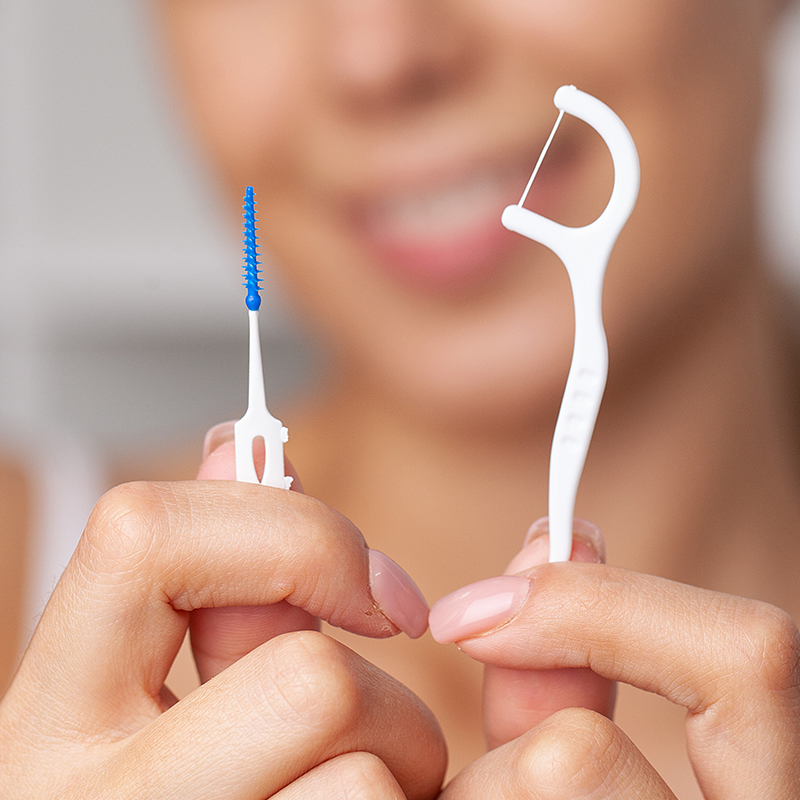 Vegan Mint PTFE Dental Floss PickA customizable mint-flavored PTFE floss pick with vegan and biodegradable positioning, ISO, CE, and RoHS claims; review material and disposal trade-offs for premium sourcing.View Product →
Where PTFE Picks Outperform—and Where They Don’t
The table below is a practical sourcing view, not a clinical ranking. It shows where a PTFE floss pick tends to fit and what buyers should verify before choosing it.
| Use case or priority | PTFE pick fit | Why it matters | Watch-out |
|---|---|---|---|
| Tight tooth contacts | Strong | Low friction and thin floss can reduce drag and multiple passes. | Too much slip can feel less “grippy” to some users. |
| Braces and bridges | Strong | Easier threading around wires and hard-to-reach gaps. | Tip shape and floss tension must be tested; poor bonding can cause pull-out. |
| Heavy shredders | Often strong | PTFE usually resists fraying better than standard nylon. | Sharp restorations can still cut any floss; run a shred test. |
| PFAS-free brand claim | Weak fit | PTFE is a fluoropolymer in the PFAS family, so it complicates the claim. | Use UHMWPE, PE, or nylon and verify supplier documentation. |
| Low-cost everyday pick | Moderate | PTFE can justify a premium price but raises material cost. | Keep a nylon or PE option for value channels. |
PFAS and Disposal: The Real Buyer Trade-Off
PFAS concerns are now part of the floss conversation. PTFE is a fluoropolymer, and some environmental health groups classify it within the broader PFAS family. A 2019 observational study reported an association between use of a PTFE-based floss and higher serum PFAS levels in some participants; it did not prove that the floss caused the difference. That distinction matters, but it is enough to make brand owners ask harder questions.
If a product will be marketed as PFAS-free, “PTFE-free” alone may not satisfy every retailer or regulator. Ask for material declarations, test reports, and a clear definition of the claim. If the target market is sensitive to fluoropolymer messaging, a UHMWPE or polyethylene floss pick is often the simpler route. If the target market values glide and tight-contact performance above all, PTFE can still be defensible—provided the claim is accurate and the disposal message is honest.
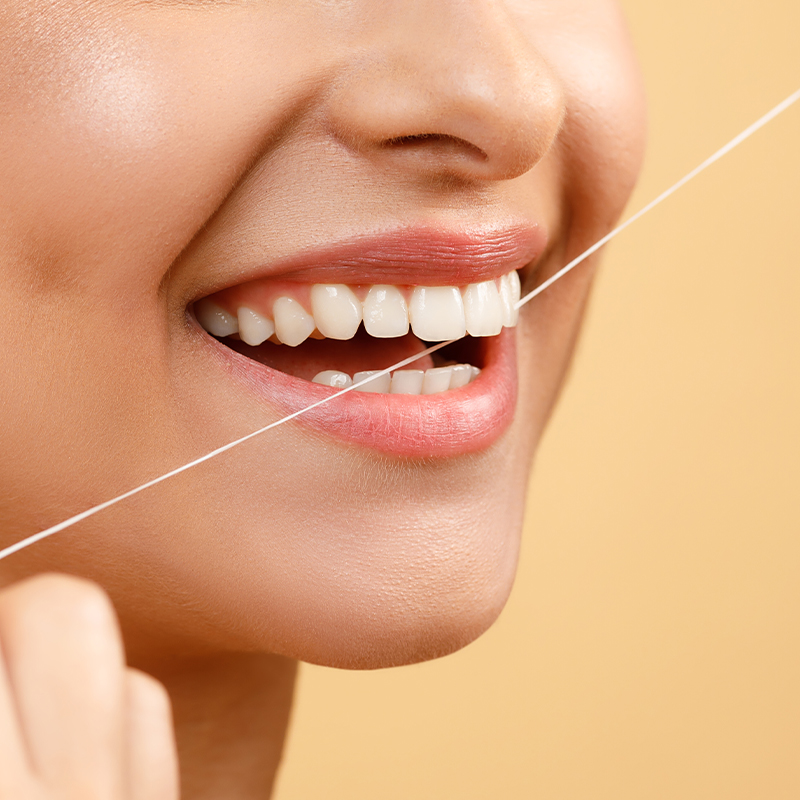 Sea Salt UHMWPE Dental Floss in Hexagon BoxA 50-meter UHMWPE floss with sea-salt flavor and a hexagonal holder, suited to buyers seeking a PTFE-free daily floss option with OEM customization.View Product →
Material Comparison at a Glance
The chart below is an illustrative handling profile, not a clinical score. It reflects common material behavior that product teams test during sampling: glide, tight-contact access, and shred resistance.
In sampling, compare the full pick: floss pull-out force, fraying after repeated passes, handle flex, tip burrs, and how the floss behaves after 30 seconds of use. A material chart is a starting point; a bench test and user trial are the decision point.
How Manufacturers Build a Better PTFE Pick
The floss is only one part of the product. A good PTFE pick also needs a handle that does not flex too much, a bridge that keeps the floss taut without cutting it, and a tip that reaches between teeth without feeling sharp. Common handle plastics include ABS, HIPS, and PP; each affects stiffness, surface finish, and recyclability messaging.
For brands, the specification should include floss denier or thickness, tensile strength, coating or wax level, flavor, handle material, pull-out force, and packaging format. A sample that only looks right is not enough; it should survive repeated use and still release cleanly from the mold.
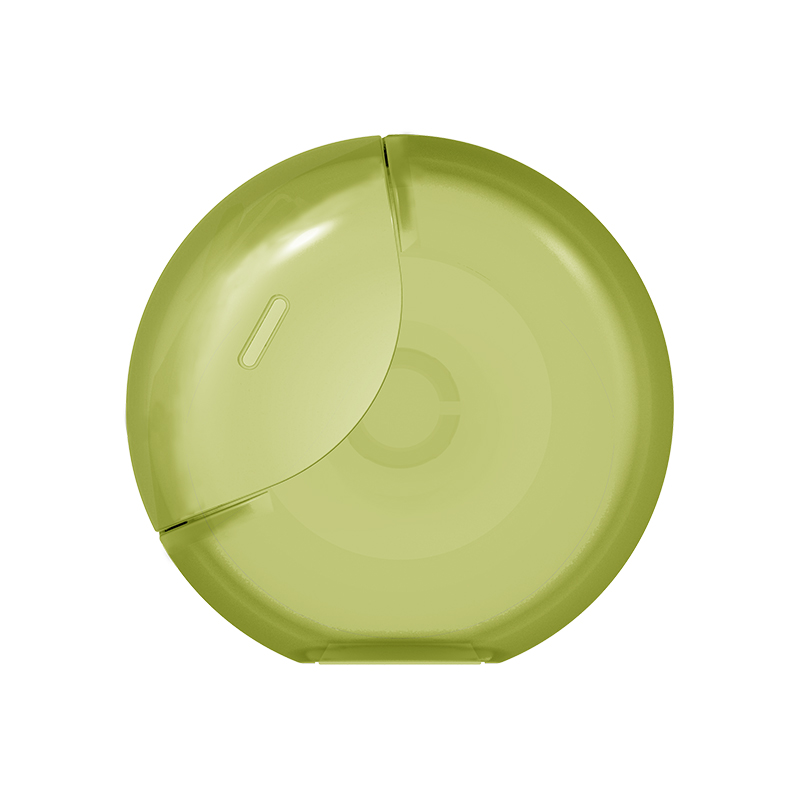 PTFE Dental Floss OEM/ODM for Oral Care BrandsA monofilament PTFE floss offered by Buletedan for OEM/ODM programs, with round, flat, and triangular variants for tight interdental cleaning.View Product →
Buletedan is committed to producing and providing high-quality, affordable and innovative oral health care products. Buletedan's mission is to serve people's oral health. Health brings beauty and confidence. Our manufacturing factories, professional engineers, experienced employees, standardized management, and strict quality control ensure that we meet your specific requirements. Buletedan is a professional floss pick, interdental brush, dental floss, and toothbrush factory, providing one-stop OEM and ODM contract manufacturing services. If you have seen brand products on shopping sites such as Amazon, eBay, TikTok, Instagram, or in retail stores, those products are likely manufactured by Buletedan.
Buying Checklist for Brands and Sourcing Teams
Before choosing a PTFE floss pick, separate the marketing question from the manufacturing question. The marketing question is whether PTFE fits the brand’s PFAS, sustainability, and price story. The manufacturing question is whether the pick performs consistently at scale.
- Confirm the floss material and ask for a written material declaration, especially if the product will carry a PFAS-related claim.
- Request a shred test around sharp restoration simulators and a pull-out test between floss and handle.
- Check handle stiffness, bridge radius, tip burrs, and mouth-feel in a blind user trial.
- Verify certifications and market requirements for the target region, including ISO and applicable US or EU standards.
- Review packaging, flavor, and shelf-life claims against the actual sample, not the concept sheet.
- Ask for a small production run before committing to a full order, and keep a UHMWPE or nylon alternative in the range if PFAS-free positioning matters.
For a deeper review of shape, handle, and floss tension, see this guide to what to check when choosing dental floss sticks. If you are planning a private-label or custom floss pick program, contact Buletedan to discuss samples, tooling, and production requirements.
Frequently Asked Questions
Q1. Are PTFE dental floss picks better than nylon picks?
For glide, tight contacts, and shred resistance, they often are. Nylon can be cheaper and works well for many users, but it tends to fray more around sharp contacts.
Q2. Do PTFE floss picks contain PFAS?
PTFE is a fluoropolymer in the PFAS family, so brands making PFAS-free claims usually avoid it. Ask suppliers for material declarations and test documentation.
Q3. Are PTFE picks better for braces?
Many users find them easier to slide around wires and tight contacts. Use gentle pressure and follow the orthodontist’s cleaning advice.
Q4. Are PTFE picks worth the higher cost?
If comfort, glide, and fewer breaks matter, yes. If PFAS-free positioning or low cost is the priority, UHMWPE, PE, or nylon picks may be the better buy.
Your email address will not be published. Required fields are marked *




Copyright © Buletedan
OEM/ODM/JDM Dental Floss, Interdental Brushes, Toothbrush Company
