



 中文简体
 日本語
 English
 русский
 Español
 Français
 বাংলা
 한국어
 Latine
 Tiếng Việt
 عربى
 ไทย
 Hrvatski
 dansk
 čeština
 Pilipino
 Nederlands
 Deutsch
 Suomalainen
 Magyar
 Indonesia
 فارسی
 Bahasa Melayu
 italiano
 norsk
 Português
 Gaeilge
 Polskie
 Română
 svenska
 Slovák
 Türk

Eco Friendly Interdental Brushes: Materials, Specs and OEM Sourcing Guide

Buletedan has helped thousands of companies around the world achieve the production of quality products through our professional manufacturing solutions.


Content
- 1 What "Eco Friendly" Means on an Interdental Brush Label
- 2 Handle, Bristle and Core Materials Compared
- 3 Where the Weight — and the Waste — Actually Sits
- 4 Three Common Eco Builds, Scored Side by Side
- 5 Exploded View: The Three Parts Behind One Claim
- 6 Wire Core or Rubber Head: Performance Still Comes First
- 7 Reuse, Refills and the Numbers Buyers Rarely Check
- 8 Packaging and Claims: The Usual Procurement Traps
- 9 Sourcing Eco Interdental Brushes: A Practical Checklist
- 10 FAQ: Eco Friendly Interdental Brushes
A buyer in Hamburg opens a sample bag of interdental brushes and reads the card: "eco friendly". No material, no standard, no end-of-life path. That is where a purchase decision usually stalls — and it is the right place to stall.
The conclusion first: on an interdental brush, environmental performance is decided by three things only. The handle material and how much recycled or bio-based content it actually carries. Whether the head is a wire-core brush or a soft rubber one. And the packaging plus the evidence behind the printed claim. Everything else on the label is decoration.
What "Eco Friendly" Means on an Interdental Brush Label
The phrase covers four separate levers, and buyers routinely mix them up: material substitution (recycled polypropylene, bio-based TPE, bamboo, bristles derived from castor bean oil), reusability (a durable handle with replaceable heads), packaging (paper blister cards instead of PVC or PET), and end-of-life claims (recyclable, industrially compostable, home compostable).
Only the fourth lever needs third-party proof, and it is the one most often left vague. "Biodegradable" without a test method and a time frame means nothing on a shelf. "Compostable" should point to a recognised standard such as EN 13432 for industrial composting, and a home-compostable claim needs its own separate evidence. Brush size, by contrast, is objective: ISO 16409 covers manual interdental brushes and their colour-coded sizing, so a buyer can specify size precisely even while the green claim is still being reviewed.
Handle, Bristle and Core Materials Compared
Five constructions dominate the eco-positioned segment. Each one supports a different claim, and each has a failure mode that appears in the first production run rather than in the sample.
| Construction | Handle / body | Bristles and core | Strongest defensible claim | Main watch-out |
|---|---|---|---|---|
| Recycled PP with rubber head | Recycled PP, TPE overlay | Soft TPE, no metal wire | Handle contains a stated share of post-consumer recycled plastic | Colour matching and recycled-content certificates must be checked per batch |
| Bamboo handle | Coated bamboo | Castor-bean-derived bristles, nylon core | Handle from a fast-renewing plant resource | Bristles and coating are not compostable; glue lines can block home composting |
| Bio-based / PLA-blend handle | PLA or starch blend | Nylon or TPE | Bio-based content, stated as a percentage | Often needs industrial conditions; lower heat resistance and shorter shelf life |
| Steel wire, reusable | PP or TPE, kept for weeks | Stainless steel wire, nylon bristles | Reusable, far less material per cleaning | Not suitable for implants or exposed root surfaces |
| Refillable handle system | Durable PP or ABS, retained | Replaceable heads | One handle, many heads | Refill availability decides whether the claim survives year two |
Two rules keep this table honest. Ask for the bill of materials by component weight before accepting any percentage — "made with recycled plastic" can mean 30% or 95%. And check that the bristle matches the story: a bamboo handle with nylon bristles is a plant-based handle, not a plant-based brush.
 Eco-Friendly Interdental Brush OEM/ODM ManufacturingBiodegradable PLA, PBS or bamboo handle options with eco-friendly bristles, modular refillable designs and OEM/ODM support for brands seeking lower-plastic oral care.View Product →
Where the Weight — and the Waste — Actually Sits
Weight is a rough but useful proxy for where material impact sits, and it rarely matches what the shopper perceives.
Two conclusions follow. The handle is the biggest single lever on material footprint, which is why the resin grade matters more than swapping the blister card. Packaging, however, is the lever customers actually see, and a mixed PVC/PET blister can undo a good handle story during a retail review.
A reusable construction changes the arithmetic completely: the handle is produced once and amortised across many heads, so mass per use — not mass per unit — becomes the number worth quoting in a tender.
Three Common Eco Builds, Scored Side by Side
The scores below are editorial, on a 1–5 scale, and are meant to show trade-offs rather than laboratory data.
Read the chart by market rather than by total score. Recycled PP with a rubber head wins on cost and tooling and is easy to document. Bamboo wins on the story but loses on end-of-life, because neither bristles nor coating compost. A reusable steel-wire brush scores highest on cleaning efficiency and material per use, yet it is the wrong recommendation for implants or exposed root surfaces.
Exploded View: The Three Parts Behind One Claim
An interdental brush is three decisions stacked together, and each part carries a separate claim that has to be documented on its own.
Specify all three components separately: handle resin grade and recycled-content percentage, head construction (wire core diameter in millimetres, or soft TPE), and packaging substrate with its disposal stream. Suppliers who can quote those three lines without checking usually have a real bill of materials behind them; suppliers who answer with adjectives usually do not.
Wire Core or Rubber Head: Performance Still Comes First
Environmental design cannot override anatomy. A wire-core brush remains the reliable option for tight contact points and around brackets, while a soft rubber or TPE brush suits wider embrasures, implant sites, crowns and patients who find wire uncomfortable. Recommending a rubber brush for a 0.8 mm contact gap is a clinical compromise dressed up as sustainability.
In practice, the eco choice is usually about material rather than geometry: a recycled-content handle on a wire-core brush, or a bio-based TPE head on a rubber brush. Both keep the ISO size coding intact, so the patient buys the same size next time without relearning the shelf.
 Soft TPE I-Shape Interdental Brush SP002Soft TPE bristles and a straight I-shaped handle support comfortable 360° cleaning; customizable colors and packaging suit private-label oral care ranges.View Product →
Reuse, Refills and the Numbers Buyers Rarely Check
A refillable handle is only greener if refills actually reach the shelf. Three numbers decide it: material saved per user per year, the refill-to-handle price ratio, and whether the retail pack has room for a second head. If a refill costs 80% of a new brush, most users will not switch, and the claim becomes packaging decoration.
At shipment level the same logic applies. Lighter handles and paper cards cut freight weight and carton volume, and those savings are usually larger and easier to prove than the per-unit material saving that marketing wants to print.
Packaging and Claims: The Usual Procurement Traps
Green-claim enforcement has tightened in Europe and North America, and the weakest link is almost always wording. Absolute statements — "100% eco-friendly", "plastic-free", "fully biodegradable" — are the ones most likely to be challenged. Specific, verifiable statements survive scrutiny: "handle contains 50% post-consumer recycled PP", "blister card is recyclable in paper streams", "bristles are made from a castor-bean-derived polymer".
Three checks before anything is printed. The recycled-content certificate matches the resin batch. The compostability report names the standard and the test conditions. The disposal instruction matches the market where the product is sold — a brush shipped with German-language copy and French disposal icons is a compliance finding waiting to happen.
Sourcing Eco Interdental Brushes: A Practical Checklist
A workable sourcing brief contains eight items:
- Bill of materials by component, with recycled or bio-based content stated as a percentage of weight.
- Resin grade plus a third-party recycled-content certificate for the production batch.
- Bristle specification: material, diameter, and whether it is bio-based or biodegradable, which are different claims.
- Brush size to the ISO 16409 colour code, plus wire diameter in millimetres for wire-core versions.
- Packaging substrate, its intended disposal stream, and a test report if any compostability is claimed.
- Claim wording reviewed against the rules of each destination market before artwork is approved.
- Sample and prototype sign-off before tooling, with tolerances stated for head fit and bristle retention.
- MOQ, tooling cost, lead time, and refill availability if a reusable handle is proposed.
Buletedan is committed to producing and providing high-quality, affordable and innovative oral health care products, and its mission is to serve people's oral health — health brings beauty and confidence. Manufacturing factories, professional engineers, experienced employees, standardized management and strict quality control support one-stop OEM and ODM contract manufacturing for floss picks, interdental brushes, dental floss and toothbrushes. The company describes itself as the pioneer of dental floss picks in China, and its interdental brush range spans steel-wire, soft rubber, hard rubber and environmentally friendly constructions built to US and European standards.
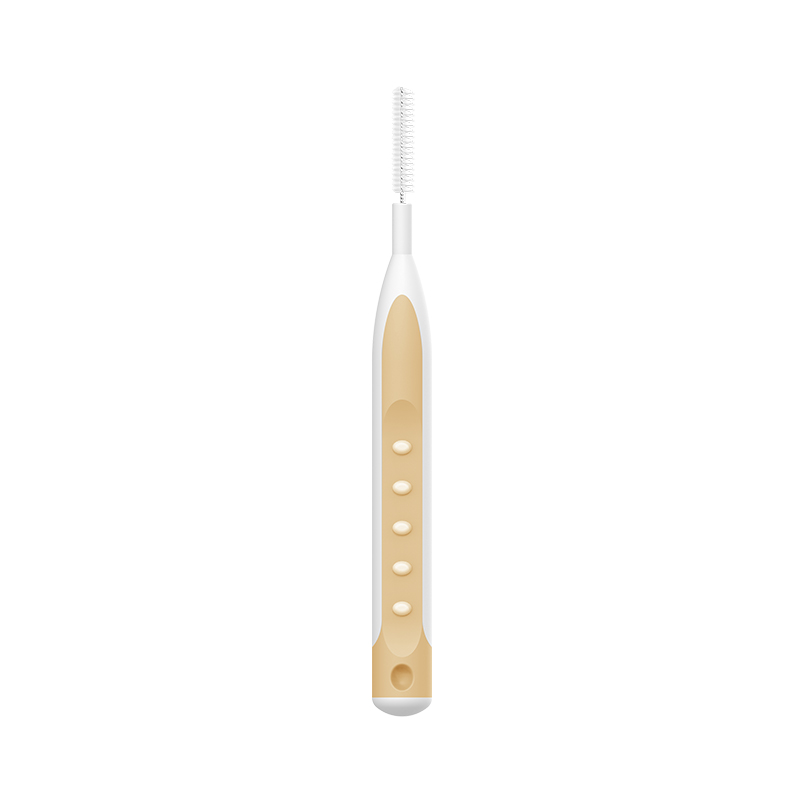 SIB002 Orthodontic I-Shape Interdental BrushUltra-thin brush head for brackets and archwires, with coated stainless steel wire and customizable filament, color, flavor and packaging for OEM orders.View Product →
If you need background on how brush sizes and head shapes are classified, this explainer on what interdental brushes are is a useful starting point. For a quotation on a specific eco construction, contact the team with your target market, size range and packaging format.
FAQ: Eco Friendly Interdental Brushes
Q1. Are eco friendly interdental brushes actually biodegradable?
Usually not as a whole brush. Bamboo or bio-based handles may biodegrade under defined conditions, but bristles, coatings and wire cores generally do not. Ask which component carries the claim.
Q2. Can I put them in a home compost bin?
Only if the supplier has home-composting evidence for that exact product. Most "compostable" brushes are certified for industrial composting under EN 13432, which needs higher temperatures.
Q3. Which size do I need for braces or implants?
Size follows the gap, not the material. Use the ISO 16409 colour code and let a clinician confirm the size; wire-core brushes are generally avoided at implant sites.
Q4. Does a reusable handle really reduce plastic?
Yes, if refills are bought. The saving comes from amortising one handle across many heads, so the refill price and shelf availability matter as much as the design.
Q5. Can we print "eco-friendly" without certification?
Risky in most Western markets. Specific, verifiable wording with supporting documents is far safer than an absolute claim, and some markets already restrict generic environmental statements.
Q6. What is a typical MOQ for custom eco brushes?
It depends on the handle mould and packaging format. New tooling and custom blister artwork push MOQ up; existing moulds with printed cards usually allow smaller runs.
Your email address will not be published. Required fields are marked *

+86-515-66660899
+86 13814347707




Copyright © Buletedan
OEM/ODM/JDM Dental Floss, Interdental Brushes, Toothbrush Company
