



 中文简体
中文简体 日本語
日本語 English
 русский
 Español
 Français
 বাংলা
বাংলা 한국어
한국어 Latine
 Tiếng Việt
 عربى
عربى ไทย
ไทย Hrvatski
 dansk
dansk čeština
 Pilipino
 Nederlands
 Deutsch
 Suomalainen
 Magyar
 Indonesia
 فارسی
فارسی Bahasa Melayu
 italiano
 norsk
norsk Português
 Gaeilge
 Polskie
 Română
 svenska
 Slovák
 Türk
Türk
How to Choose a Toothbrush: A Complete Buyer's Guide for Every Oral Care Need

Buletedan has helped thousands of companies around the world achieve the production of quality products through our professional manufacturing solutions.


Content
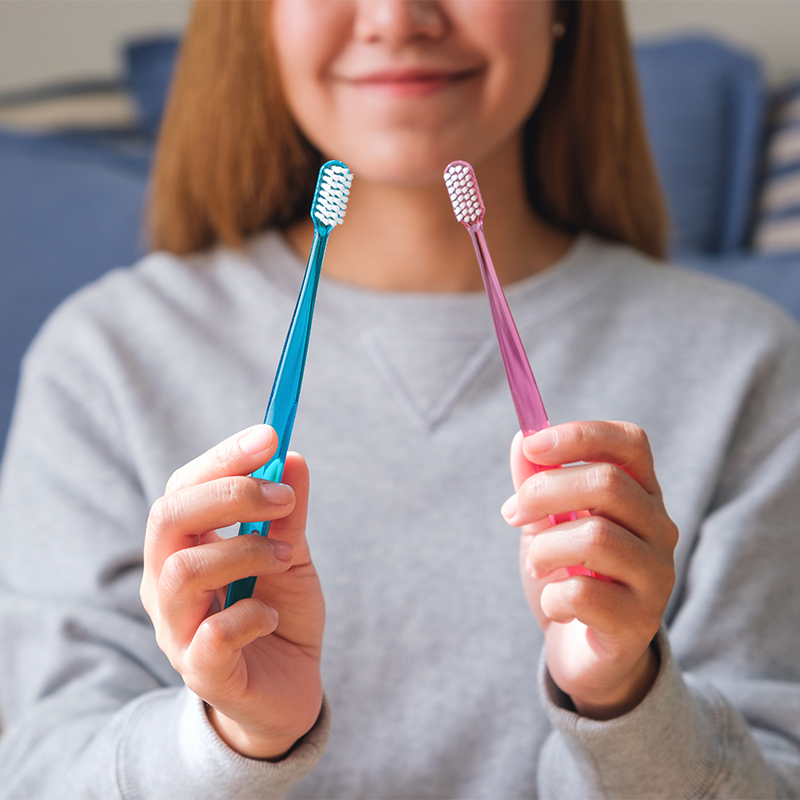
In a toothbrush aisle, you usually face three quick decisions: bristle hardness, head size, and whether to go electric or manual. Most dental professionals agree on the same conclusion: soft bristles, a compact head, and a comfortable non-slip handle are the safest starting point. The rest depends on your specific needs. Here is a practical guide to help you choose confidently.
Why Your Toothbrush Choice Matters
Your toothbrush is your primary tool for removing plaque, the sticky biofilm of bacteria that accumulates on teeth and gums. Brushing with a brush that does not fit your mouth can leave plaque behind, especially in hard-to-reach areas. Over time, plaque calcifies into tartar, which requires professional removal. The right toothbrush supports your technique, prevents gum irritation, and makes twice-daily brushing feel less like a chore.
Bristle Type: Soft Is the Safe Choice
Soft bristles are recommended by virtually every dental association. Flexible nylon or PBT filaments can clean along the gumline without causing recession or enamel abrasion. If your gums bleed after brushing, your brush is probably too firm. Buletedan's adult toothbrushes use ultrafine PBT bristles, often with spiral sharpened tips, to provide deep cleaning while remaining gentle on enamel and gums.
What About Medium or Hard Bristles?
Medium and hard bristles may feel more effective, but they often overdo it. Firm filaments can erode enamel and push back the gumline. People with braces, exposed roots, or sensitive gums should avoid them. If you want an extra-thorough clean, choose soft bristles with more filaments per tuft, not harder ones. Buletedan's TPE-handled toothbrush is a good example of a soft-bristle brush designed for deep cleaning without unnecessary force.
Brush Head Size: Getting the Right Fit
Smaller brush heads are generally better. A head between 1 and 1.5 cm wide can fit comfortably in most mouths and navigate the back molars with less effort. Larger heads may cover more surface per stroke, but they often feel bulky near the back of the jaw. Your brush head should let you clean each tooth without straining your mouth open.
| Head Size | Best For | Consideration |
|---|---|---|
| Mini / small | Children, narrow arches, tight back teeth | Easier to maneuver |
| Medium | Most adults with average jaw size | Balanced reach and coverage |
| Wide | Adults with larger mouths | Cleans more surface per stroke |
If you are buying for a child, a mini head is almost always the right call. Buletedan's children's toothbrush line includes mini brush heads with spiral sharpened PBT bristles to clean small teeth gently.
Handle Design and Grip
The handle determines how much control you have while brushing. A non-slip grip, often made of TPE over a polypropylene core, prevents your hand from slipping when wet. Ergonomic shapes reduce hand fatigue and make it easier to hold the brush at the 45-degree angle recommended by dentists. This is especially important for people with arthritis or limited dexterity.
Buletedan manufactures handles in crescent moon, diamond, and streamlined shapes to support different grip styles. Some models include silicone massage bristles on the back of the head for cleaning the tongue, adding another layer of daily hygiene.
Manual vs. Electric Toothbrush
Both types can clean your teeth well if you brush for two minutes with the correct method. Electric toothbrushes remove the need for manual brushing motion, which helps people with limited dexterity or those who struggle with proper technique. Clinical research consistently shows that powered brushes reduce plaque and gingivitis more effectively than manual brushes when used for the same duration.
If you choose a manual brush, a model with a 3D brush head and spiral sharpened bristles can improve your plaque removal without switching to powered gear. Buletedan's USA-standard adult toothbrush with a 3D brush head is designed for this purpose.
 Adult Toothbrush with 3D Brush Head and Spiral Bristles for Deep CleaningDesigned for effective plaque removal, this manual toothbrush features a 3D head and spiral sharpened bristles. It offers gum protection and multi-angle cleaning, making it a solid choice for adults seeking thorough oral care without powered tools.View Product →
Special Considerations
Different dental conditions require different brush features. Here is a quick breakdown:
- Orthodontic patients need flexible bristles that can clean around brackets and wires. Deep-reach necks or V-shaped heads are helpful.
- Children need a smaller head, a handle that fits small hands, and designs that make brushing fun. Cartoon and pet-themed handles encourage better cooperation.
- People with sensitive gums or receding gums should stick to soft or extra-soft bristles and avoid over-brushing.
- People with a smaller mouth may want a mini brush head to avoid gagging or missed molars.
Buletedan's children's toothbrush line features cat-claw shaped handles with ultrafine PBT bristles, making brushing fun while keeping little teeth clean.
Children's Toothbrush with Cat-Claw Handle and Ultra-Soft PBT BristlesThis kids' toothbrush combines a fun cat-claw handle with ultra-soft PBT bristles. It provides gentle yet effective cleaning, encouraging children to brush properly while protecting their gums and teeth.View Product →Quality Standards and What to Look For
Beyond bristle and handle design, you should consider whether the toothbrush meets recognized quality standards. A reputable manufacturer will have ISO certification, comply with USA or European standards, and maintain strict quality control from raw materials to finished product. This is particularly important for brands that sell in regulated markets.
Buletedan is a professional oral health care product manufacturer committed to producing high-quality, affordable, and innovative toothbrushes. The company has helped thousands of brands worldwide through one-stop OEM and ODM contract manufacturing services. Many toothbrush products on Amazon, eBay, TikTok, or retail stores are likely manufactured by Buletedan. If you are sourcing toothbrushes, you can contact our team for a consultation.
To understand more about toothbrush features and how they affect your daily brushing, read our article on what you need to know about toothbrushes.
Frequently Asked Questions
Q1: How often should I replace my toothbrush?
A: Every 3 to 4 months, or sooner if the bristles look frayed. Frayed bristles do not clean effectively.
Q2: Are electric toothbrushes better than manual ones?
A: Electric brushes can be more effective for plaque removal, but a manual brush works well with proper technique and patience.
Q3: Can hard bristles damage your teeth?
A: Yes. Hard bristles can wear down enamel and irritate gums. Soft bristles are the safest choice for most people.
Q4: How do I know if my toothbrush head is too big?
A: If you cannot reach your back molars comfortably, or brushing makes you gag, the head is too large for your mouth.
Your email address will not be published. Required fields are marked *

+86-515-66660899
+86 13814347707






Copyright © Buletedan
OEM/DOM/JDM Dental Floss, Interdental Brushes, Toothbrush Company
