



 中文简体
 日本語
 English
 русский
 Español
 Français
 বাংলা
 한국어
 Latine
 Tiếng Việt
 عربى
 ไทย
 Hrvatski
 dansk
 čeština
 Pilipino
 Nederlands
 Deutsch
 Suomalainen
 Magyar
 Indonesia
 فارسی
 Bahasa Melayu
 italiano
 norsk
 Português
 Gaeilge
 Polskie
 Română
 svenska
 Slovák
 Türk

How to Choose a Toothbrush for Toddlers: Head Size, Bristles, and Handle Design

Buletedan has helped thousands of companies around the world achieve the production of quality products through our professional manufacturing solutions.


Content
- 1 The Three-Point Fit Test
- 2 Brush Head Size: Match the Mouth, Not the Age Label
- 3 Bristles: Softness Is a Manufacturing Result, Not a Label
- 4 Handle Design: Who Holds the Brush Matters
- 5 Manual or Electric for Toddlers?
- 6 What Wholesale Buyers Should Verify Before Ordering
- 7 Frequently Asked Questions
- 7.1 Q1. What brush head size is right for a 2-year-old?
- 7.2 Q2. Do toddler toothbrushes need rounded bristle tips?
- 7.3 Q3. Should a toddler use a manual or electric toothbrush?
- 7.4 Q4. How often should a toddler toothbrush be replaced?
- 7.5 Q5. Which handle materials are best for toddler toothbrushes?
- 7.6 Q6. What should OEM buyers check in a toddler toothbrush sample?
Most toddler toothbrush problems are fit problems, not brushing-technique problems. A brush head that is too wide makes a child gag, stiff bristles make them pull away, and a handle designed only for an adult hand turns brushing into a daily struggle. The practical answer is a compact oval head that clears the back molars without stretching the cheek, soft end-rounded bristles, and a handle that works for the adult who does most of the brushing. Cartoon graphics do not fix a poor fit.
This guide explains how head size, bristle construction and handle geometry affect comfort and cleaning, and what wholesale buyers should verify before placing a toddler toothbrush order.
The Three-Point Fit Test
Before comparing brands or price points, hold the brush and check three things in order:
- Head clearance: The head should sit inside the mouth without forcing the lips open. It must reach the back molars without making the child gag.
- Bristle feel: Rub the bristles across your thumb. They should feel like a soft paintbrush, not a scrub brush. Any sharp or uneven tuft is a reject.
- Handle control: For children under three, the adult holds the brush. The handle needs enough length for adult fingers and a non-slip area. For older toddlers who want to hold the brush, the handle should be shorter and thicker.
If one of these fails, the brush will not be used consistently, no matter how good the packaging looks.
Brush Head Size: Match the Mouth, Not the Age Label
Age labels are a starting point, not a specification. Two children of the same age can have very different mouth sizes. A compact oval head that fits comfortably inside the cheek and reaches the back molars is more useful than a head that simply says “2 years+”. A common rule of thumb is a head that spans roughly two of the child’s teeth at a time. If the child gags as soon as the brush touches the back of the tongue, the head is probably too long or too thick.
Head thickness is often overlooked. A thick head can bump the opposite teeth and make the child close their mouth early. A slim profile is easier to angle toward the gum line. The table below gives general guidance only; individual children develop at different rates.
| Stage | Head priority | Bristle priority | Handle priority | Brushing routine |
|---|---|---|---|---|
| First teeth (about 6–18 months) | Extra-small, soft oval head | Very soft, rounded tips | Long enough for an adult grip; smooth edges | Parent brushes gently; small amount of fluoride toothpaste as advised by a dentist |
| 18 months–3 years | Compact head that reaches molars without gagging | Soft, uniform tufts with end-rounding | Non-slip grip; optional chew guard | Parent brushes; child may hold a second brush |
| 3–5 years | Small head with a slim profile | Soft bristles; check for splaying | Shorter, thicker handle for practice | Child practices with supervision; parent checks molars |
If the brush head is too small, brushing takes longer and the child may lose patience. The goal is not the smallest head on the market; it is the largest head the child accepts comfortably.
Bristles: Softness Is a Manufacturing Result, Not a Label
“Soft” is not a single specification. Bristle diameter, end-rounding, tuft density and filament material all change how a brush feels in a toddler’s mouth. The American Dental Association’s guidance on children’s toothbrushes calls for soft bristles and a head small enough to move easily inside the mouth (ADA toothbrush guidance). That is a useful minimum, but buyers still need to look at how the bristles are made.
PBT and nylon are common filament materials. PBT is often used for fine, soft bristles because it holds its shape and resists splaying. Nylon is also widely used. The material alone does not guarantee softness; a thick nylon filament can feel firmer than a fine PBT filament. Tuft density matters as well. Very dense tufts can feel stiff, while sparse tufts clean poorly.
End-rounding is the detail that separates a comfortable brush from a scratchy one. Filaments are cut to length and then polished so the tips are rounded rather than sharp. Poorly rounded tips can irritate gums and wear enamel at the gum line. Buyers should ask for the rounding process, inspection method and a magnified sample photo. A simple visual check with a magnifier can reveal flat, cut ends that were never finished.
Bristle retention is another quality point. A brush can look perfect and still shed filaments during use. Pull-force testing on tufts, plus a review of the anchoring method, helps confirm that bristles stay in the head. For toddler products, loose bristles are both a choking concern and a complaint risk.
Handle Design: Who Holds the Brush Matters
A toddler toothbrush has two users: the adult and the child. Under age three, the adult does the brushing, so the handle must fit adult fingers and allow a light, controlled grip. A handle that is too short forces the adult to crowd the child’s face; a handle that is too long can bump the back of the mouth. A non-slip section and a rounded end are basic requirements.
For children learning to brush, a shorter and thicker handle is easier to hold. A chew guard can protect the cheek and reduce the chance of the brush going too far back, but it must not create a ledge that traps toothpaste or water. Detachable handles and cartoon shapes can encourage participation, yet they should be checked for balance. A top-heavy character handle makes the brush wobble in a small hand.
Material choice affects feel and cleaning. PP is common for the rigid core because it is lightweight and dimensionally stable. TPE is often used for soft grips. Look for smooth seams, no sharp flash and a comfortable thumb rest. If the handle is advertised as recyclable or made with recycled material, ask for the supporting documentation rather than relying on the word “eco” on the packaging.
Illustrative diagram — not to scale.
Manual or Electric for Toddlers?
Manual brushes remain the default for toddlers because they are lighter, quieter and easier for a parent to control. Electric brushes can be introduced for some children, especially when the head is small and the motion is gentle, but the parent still needs to move the brush to every surface. A timer or light does not replace supervision. If an electric brush is used, choose one designed for young children and start on the lowest setting.
What Wholesale Buyers Should Verify Before Ordering
For OEM and ODM programs, the toddler toothbrush specification has to be written down, not inferred from a sample. Buletedan is committed to producing and providing high-quality, affordable and innovative oral health care products. As a professional floss pick, interdental brush, dental floss and toothbrush factory, we provide customers with one-stop OEM and ODM contract manufacturing services. Our manufacturing factories, professional engineers, experienced employees, standardized management and strict quality control ensure that we meet your specific requirements. Buletedan has helped thousands of companies around the world bring quality oral care products to market.
For toddler programs, the children’s toothbrush collection includes compact heads, soft PBT bristles and PP or PP+TPE handles with cartoon, 3D and detachable designs.
 Cat-Paw 3D Children’s Toothbrush with Soft PBT BristlesCompact PP/TPE cat-claw handle and 3D brush head pair with fine soft PBT bristles for toddler brushing programs needing grip and visual appeal.View Product →
The cat-claw style handle combines a PP/TPE grip with a compact 3D brush head and fine soft PBT bristles, which is a useful reference point for a toddler brush that needs both visual appeal and controlled handling.
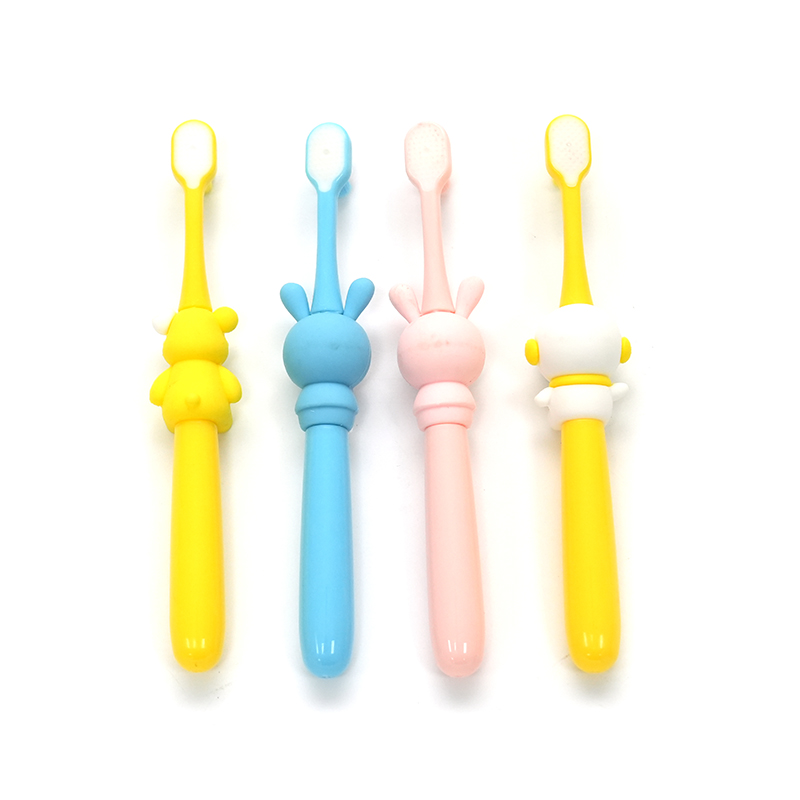 Astronaut-Handle Children’s Toothbrush with Soft PBT BristlesA 17 cm PP astronaut-style handle with two-color soft PBT bristles provides a character-shaped children’s brush; check grip and balance during sampling.View Product →
An astronaut-style handle shows how a character shape can be integrated without making the brush difficult to hold, provided the balance and grip area are checked during sampling.
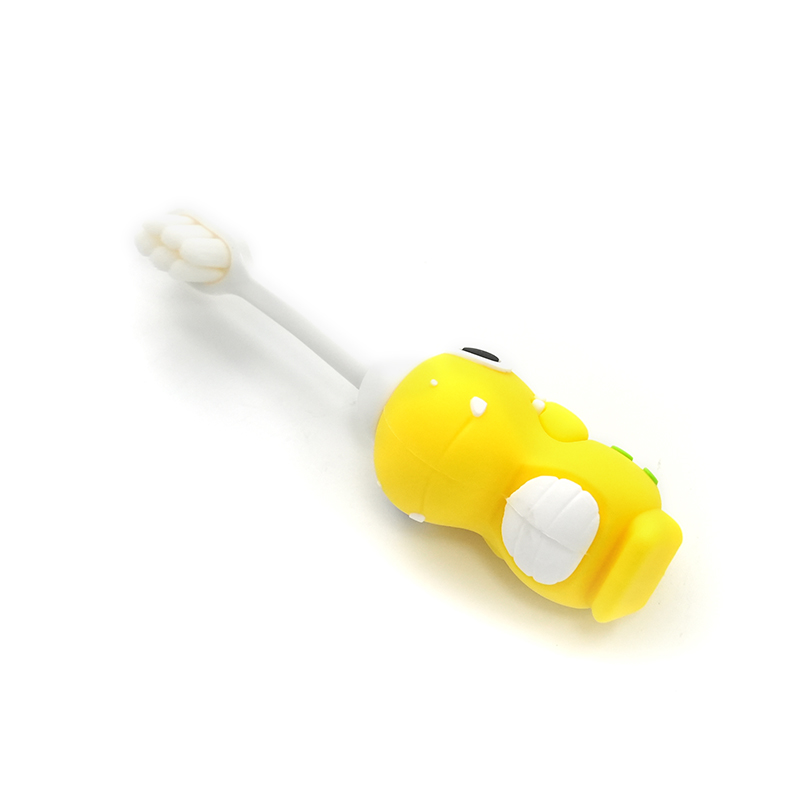 Detachable Cartoon-Handle Children’s Toothbrush with Soft PBT BristlesAn 11 cm PP detachable cartoon handle lets children assemble the brush and rinse the connection area; soft PBT bristles suit daily oral care.View Product →
Detachable cartoon handles are another option for retail sets and travel kits, but the locking mechanism should be tested for secure fit and easy cleaning.
Before production, confirm these points in the approved sample and specification sheet:
- Head length, width and thickness in millimeters, with tolerances.
- Bristle material, filament diameter and end-rounding inspection method.
- Tuft retention or pull-force test results.
- Handle material, grip hardness and surface finish.
- Age marking, warnings and packaging claims.
- Sample approval, golden sample retention and production inspection plan.
Where relevant, request test reports against the general requirements and test methods in ISO 20126 for manual toothbrushes. Do not accept a verbal “soft” claim without a sample and a written specification. A toddler brush that passes adult testing can still fail in a small mouth if the head is too wide or the handle is top-heavy.
Frequently Asked Questions
Q1. What brush head size is right for a 2-year-old?
A compact oval head that fits comfortably inside the mouth and reaches the back molars without gagging is the practical choice. If the child gags when the brush touches the back of the tongue, try a shorter or thinner head.
Q2. Do toddler toothbrushes need rounded bristle tips?
Yes. Soft filaments with rounded ends reduce gum irritation and feel more comfortable. Ask the supplier how the bristles are end-rounded and inspect a magnified sample before approving production.
Q3. Should a toddler use a manual or electric toothbrush?
Most toddlers do well with a manual brush because a parent can control the angle and pressure. An electric brush can be used if the head is small and the motion is gentle, but supervision is still required.
Q4. How often should a toddler toothbrush be replaced?
Replace it every three to four months, or sooner if the bristles splay or the child has been ill. A brush that no longer stands straight will not clean the gum line effectively.
Q5. Which handle materials are best for toddler toothbrushes?
PP is common for the rigid core and TPE for soft grips. Look for smooth seams, no sharp flash and a balanced shape. Food-contact documentation and material test reports should be available on request.
Q6. What should OEM buyers check in a toddler toothbrush sample?
Check head dimensions, bristle softness and end-rounding, tuft retention, handle grip, age warnings and packaging claims. Confirm the approved sample in writing before mass production, and state the inspection standard clearly.
If you are sourcing toddler toothbrushes for a retail, gift or OEM program, contact our team to discuss head dimensions, bristle specifications, handle designs, packaging and sample approval for your next project.
Your email address will not be published. Required fields are marked *






Copyright © Buletedan
OEM/ODM/JDM Dental Floss, Interdental Brushes, Toothbrush Company
