



 中文简体
 日本語
 English
 русский
 Español
 Français
 বাংলা
 한국어
 Latine
 Tiếng Việt
 عربى
 ไทย
 Hrvatski
 dansk
 čeština
 Pilipino
 Nederlands
 Deutsch
 Suomalainen
 Magyar
 Indonesia
 فارسی
 Bahasa Melayu
 italiano
 norsk
 Português
 Gaeilge
 Polskie
 Română
 svenska
 Slovák
 Türk

What Makes a High-Quality Soft Bristle Toothbrush? Buyer's Manufacturing Guide

Buletedan has helped thousands of companies around the world achieve the production of quality products through our professional manufacturing solutions.


Content
- 1 What “Soft” Actually Means: Filament Material, Diameter, and End Shape
- 2 Cleaning Performance: Soft Does Not Mean Ineffective
- 3 Handle, Head, and Bristle Geometry: Where Quality Shows
- 4 Manufacturing and Inspection Points Buyers Should Audit
- 5 Specifications to Confirm Before Sampling
- 6 Matching Softness to User Groups and Sales Channels
- 7 Quality Verification Before Bulk Production
- 8 Frequently Asked Questions
- 8.1 Q1. What makes a soft bristle toothbrush high quality?
- 8.2 Q2. Is a softer bristle always better for gums?
- 8.3 Q3. Which bristle material is better, PBT or nylon?
- 8.4 Q4. How can buyers verify end-rounding and tuft retention?
- 8.5 Q5. What filament diameter should a soft toothbrush use?
- 8.6 Q6. Can soft bristle toothbrushes be customized for OEM or ODM projects?
A soft bristle toothbrush is not automatically a gentle toothbrush. In bulk sourcing, “soft” is a specification, not a marketing word. Two brushes can both be labeled soft while differing in filament diameter, end-rounding, tuft density, head geometry, and handle control. For buyers, the real question is whether the brush protects the gingival margin while still disrupting plaque. The answer usually sits in the combination of materials, tooling, and inspection discipline.
This guide explains what to confirm before you approve a sample, place a bulk order, or brief an OEM partner. The focus is on details that affect user comfort, cleaning performance, retail consistency, and risk control.
What “Soft” Actually Means: Filament Material, Diameter, and End Shape
Softness starts with the filament. PBT and nylon are common toothbrush bristle materials, but they do not behave identically. PBT is widely used for its resilience and shape retention; nylon can offer different flexibility and moisture behavior. Buyers should ask for the exact material grade, colorant system, and material documentation rather than accepting a generic “soft bristle” description.
Filament diameter is the first control point. A smaller diameter bends more easily and generally feels softer, while a larger diameter feels firmer. There is no single universal “soft” diameter because the final feel also depends on filament length, tuft density, trim profile, and user technique. Ask for the nominal diameter, tolerance range, and test method. Then compare samples at the same tuft count and head size.
End-rounding matters as much as diameter. A thin filament with a sharp cut edge can still irritate gum tissue. Request end-rounding inspection under magnification and review production samples, not only hand-made prototypes. ISO 20126 provides general requirements and test methods for manual toothbrushes; it is a useful baseline, but buyers should add their own requirements for filament diameter, tuft retention, end shape, and dimensional consistency.
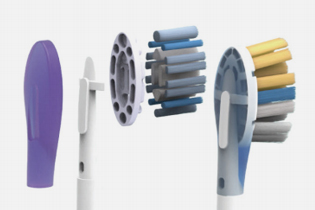 TB25-C0013 Adult Soft PBT and Silicone ToothbrushAdult manual toothbrush with soft PBT and silicone massage bristles, offered for buyers checking plaque access, gum comfort, and filament specifications.View Product →
Cleaning Performance: Soft Does Not Mean Ineffective
Plaque removal depends on access and contact. Soft bristles can conform to the sulcus and around orthodontic brackets, but a low-density brush may feel gentle while leaving plaque behind. A well-designed soft brush uses enough tufts, suitable bristle length, and a trim profile that reaches the gumline without forcing the user to press hard.
Bristle patterns such as multi-level, tapered, spiral, and compact tufts can change how the brush performs. These features should be validated through bench inspection and user trials rather than assumed from the shape alone. For a broader technical view of brush construction, see this overview of toothbrush construction and bristle design.
For procurement, compare brushes at equal diameter and tuft count. Ask the supplier to explain how the bristle map supports the target user group: daily adult use, sensitive gums, orthodontic care, or children’s brushing. A soft brush that collapses too easily may encourage repeated scrubbing, which works against the original comfort goal.
Handle, Head, and Bristle Geometry: Where Quality Shows
Handle design influences pressure control. PP handles are common and cost-effective; PP with TPE grips improves control when hands are wet. A flexible neck can act as a simple force limiter, but too much flex reduces precision. Check parting lines, flash, grip bonding, and dimensional consistency, because these details affect how the brush feels in use and how it performs on a retail shelf.
Head size and shape also matter. Full-size heads suit general adult use, while compact and mini heads improve access for smaller mouths or sensitive areas. A 3D or angled brush head may help reach posterior teeth, but it must remain comfortable and easy to control. Children’s brushes need a smaller head, a shorter neck, and a filament specification that is soft without becoming ineffective.
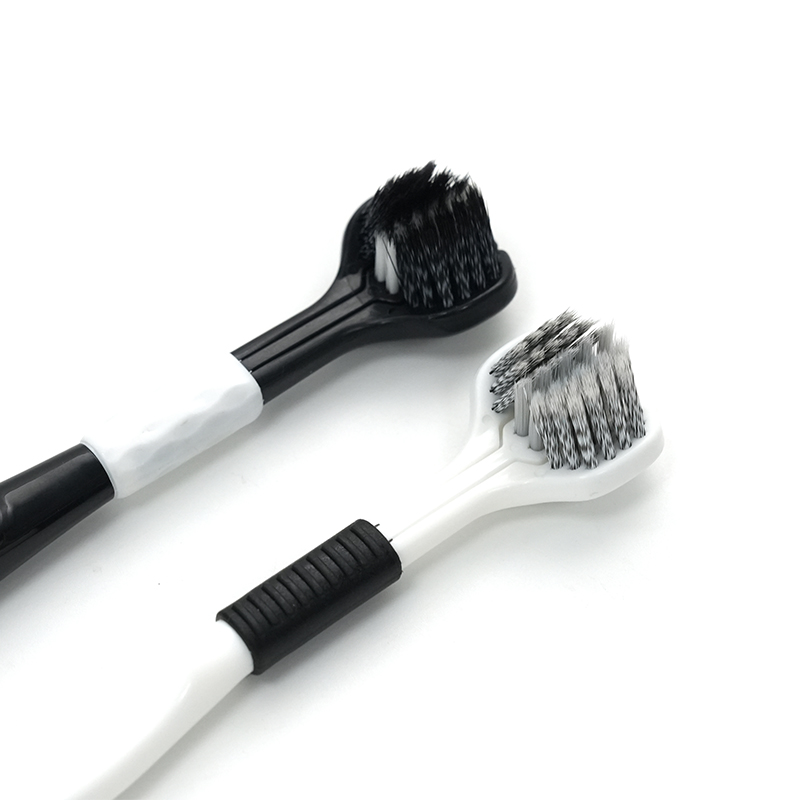 TB25-C0031 Adult 3D Brush Head ToothbrushAdult manual toothbrush with a 3D head and spiral tapered PBT bristles, relevant for evaluating head shape, posterior access, and production consistency.View Product →
Manufacturing and Inspection Points Buyers Should Audit
Quality is built into tooling, injection molding, tufting, trimming, cleaning, and packing. In-house mold and tooling capability helps control brush head dimensions and shorten development cycles. Buyers should review the process flow and ask where each inspection happens. A typical sequence runs from filament selection and end-rounding through tufting, trimming, inspection, and packing.
Tuft retention is a practical safety and quality point. Ask for pull-test records and the sampling plan. End-rounding should be checked on production lots, not just golden samples. Bristle length, hole diameter, head width, neck strength, and handle color should be measured against the approved specification. Packaging should be checked for artwork, barcode, language, and blister sealing.
Buletedan is a professional floss pick, interdental brush, dental floss, and toothbrush factory offering one-stop OEM and ODM contract manufacturing. The company’s oral care manufacturing covers in-house mold and tooling, laboratory support, and standardized quality control. Its mission is to serve people’s oral health, because health brings beauty and confidence. Buyers reviewing adult toothbrush options can use these capabilities to move from concept to a production-ready specification.
Specifications to Confirm Before Sampling
| Specification area | What to confirm | Why it matters |
|---|---|---|
| Filament material | PBT or nylon grade, colorant, material certificate | Affects feel, resilience, and market documentation |
| Filament diameter | Nominal size, tolerance, and measurement method | Defines softness more reliably than a label |
| End shape | Rounded, tapered, or spiral; inspection method | Reduces irritation risk and supports gum comfort |
| Tufting | Tuft count, pattern, hole size, pull-test plan | Influences cleaning coverage and bristle retention |
| Brush head | Length, width, trim profile, compact or 3D shape | Affects access to posterior teeth and sensitive areas |
| Handle | PP or PP+TPE, grip design, neck flex, dimensions | Controls pressure and user handling |
| Compliance | ISO 20126 baseline and target-market test reports | Supports risk review and retailer acceptance |
Matching Softness to User Groups and Sales Channels
A single soft specification rarely fits every channel. Adult daily brushes need a balance of gentleness and plaque removal. Sensitive-gum brushes benefit from end-rounded filaments and a compact head. Orthodontic brushes may need a tuft pattern that reaches around brackets and wires. Children’s brushes require a smaller head and a filament that flexes easily under a child’s lighter hand pressure.
Retail and private-label programs also need consistency. The approved sample must match the production standard for color, handle finish, bristle trim, and packaging. For eco-positioned ranges, confirm the actual material and recyclability claims before printing them on the pack. Softness should be one part of a clear product story, not a vague claim that cannot be verified.
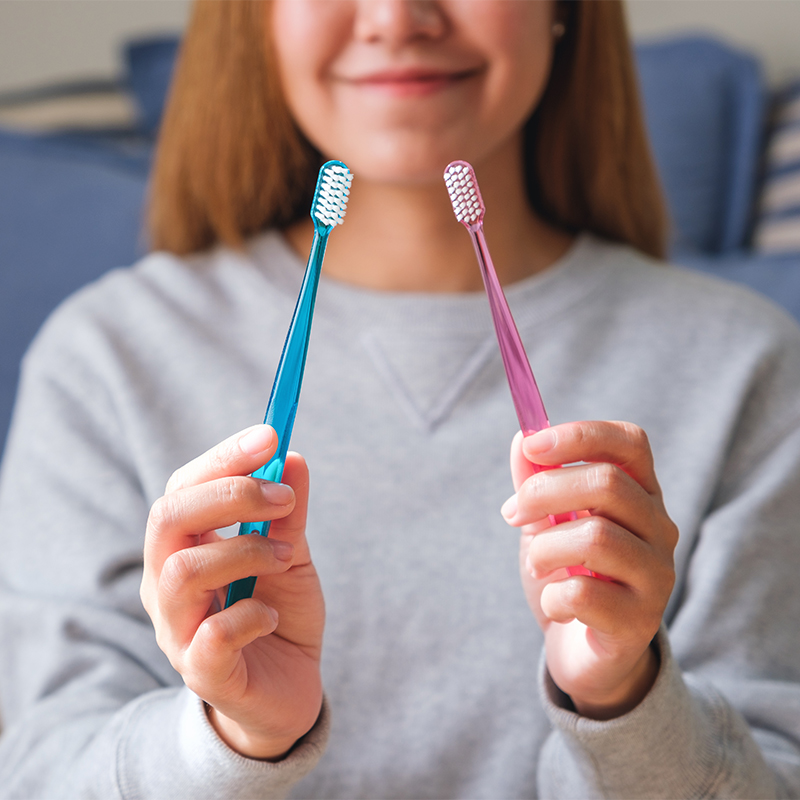 TB25-C0026 Children's Cat-Claw Handle ToothbrushChildren's manual toothbrush with a PP/TPE cat-claw handle and soft PBT bristles, useful for reviewing private-label samples, comfort, and packaging consistency.View Product →
Quality Verification Before Bulk Production
Before bulk production, request samples made with the production tool and production filament. Review filament diameter records, end-rounding photos, tuft pull data, dimensional reports, material certificates, and packaging proofs. Run a pilot batch and check the brush from the user’s perspective: gum comfort, control, cleaning access, and rinsing.
Confirm MOQ, lead time, mold ownership, change-control procedures, and inspection responsibilities in writing. A supplier that can explain how it controls filament, tufting, and final inspection is easier to audit than one that only sends finished samples. Do not accept “soft” as a verbal promise. Define it with measurable specifications and approved samples.
Frequently Asked Questions
Q1. What makes a soft bristle toothbrush high quality?
A high-quality soft brush combines suitable filament material, controlled diameter, rounded ends, secure tufting, a well-designed head, and a handle that supports light pressure. Consistent production inspection is also essential.
Q2. Is a softer bristle always better for gums?
Not always. Very soft bristles may collapse and clean poorly if tuft density and trim are inadequate. The goal is a soft brush that still provides enough contact for plaque removal without encouraging hard scrubbing.
Q3. Which bristle material is better, PBT or nylon?
Both can work. PBT is common for resilience and shape retention, while nylon offers different flexibility and moisture behavior. The right choice depends on the target feel, durability requirements, and market documentation.
Q4. How can buyers verify end-rounding and tuft retention?
Ask for end-rounding inspection under magnification and production-lot pull-test records. Review samples from the actual tool and confirm the sampling plan, acceptance criteria, and corrective-action process.
Q5. What filament diameter should a soft toothbrush use?
There is no single universal diameter. It depends on material, bristle length, tuft density, and the user group. Specify nominal diameter and tolerance, then validate the feel and cleaning performance through approved samples.
Q6. Can soft bristle toothbrushes be customized for OEM or ODM projects?
Yes. Custom programs can cover filament choice, tuft pattern, head shape, handle material, color, packaging, and compliance documentation. Final MOQ, tooling, and lead time should be confirmed against the specific project brief.
Your email address will not be published. Required fields are marked *







Copyright © Buletedan
OEM/ODM/JDM Dental Floss, Interdental Brushes, Toothbrush Company
