



 中文简体
 日本語
 English
 русский
 Español
 Français
 বাংলা
 한국어
 Latine
 Tiếng Việt
 عربى
 ไทย
 Hrvatski
 dansk
 čeština
 Pilipino
 Nederlands
 Deutsch
 Suomalainen
 Magyar
 Indonesia
 فارسی
 Bahasa Melayu
 italiano
 norsk
 Português
 Gaeilge
 Polskie
 Română
 svenska
 Slovák
 Türk

Soft PBT Bristle Toothbrush Manufacturer: Sourcing Guide for B2B Buyers

Buletedan has helped thousands of companies around the world achieve the production of quality products through our professional manufacturing solutions.


Content
- 1 Why PBT Is the Default Choice for Soft Bristle Toothbrushes
- 2 What to Specify Before Sampling a Soft PBT Toothbrush
- 3 Softness Is a System, Not a Single Number
- 4 Quality Checks That Prevent Returns
- 5 OEM/ODM Path: From Prototype to Production
- 6 Manufacturer Snapshot: Buletedan
- 7 Cost, MOQ, and Lead Time: What to Clarify Early
- 8 Frequently Asked Questions
A buyer approves a soft PBT bristle toothbrush sample, then receives mass production with a noticeably firmer feel. The polymer did not change; the filament diameter, end-rounding, or tuft density drifted outside the agreed window. For B2B sourcing, the useful question is not simply “PBT or nylon?” but “can the manufacturer hold the same hand-feel across lots?” PBT is a strong starting point. Process control makes it repeatable.
This guide is written for brand owners, importers, and product managers who need a soft PBT bristle toothbrush manufacturer that can document materials, control bristle geometry, and support OEM or ODM programs without turning a simple toothbrush into a compliance project.
Why PBT Is the Default Choice for Soft Bristle Toothbrushes
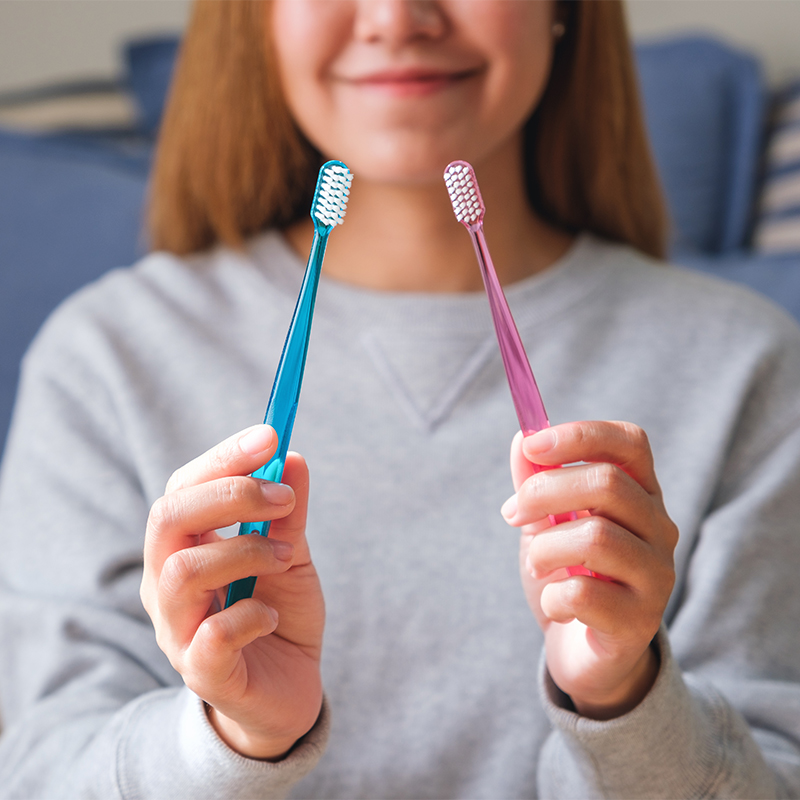
PBT, or polybutylene terephthalate, is a polyester used for toothbrush filaments because it balances softness, stiffness, and dimensional stability. Compared with nylon, PBT usually absorbs less water, so the brush is less likely to feel different after storage in a humid bathroom or a long sea shipment. That matters when a brand promises a soft feel across markets and seasons.
PBT also accepts fine filament drawing and end-rounding well. A soft brush is not made soft by the polymer name alone. It is made soft by filament diameter, tuft density, filament length, and the quality of tip rounding. A supplier that can control those variables is more valuable than one that simply quotes “PBT.”
| Property | PBT | Nylon | Sourcing implication |
|---|---|---|---|
| Water absorption | Lower | Higher | PBT helps keep stiffness and feel more stable in humid storage. |
| Dimensional stability | Good | Good, but more moisture-sensitive | Specify conditioning and test conditions. |
| Softness control | Achieved through diameter, length, and end-rounding | Similar levers, different feel | Approve a sample across multiple lots, not one batch. |
| Cost | Usually moderate to high | Wide range | Compare total landed cost, not filament price alone. |
 PP Handle Ultra-Fine Soft PBT Adult Toothbrush TB25-C0015Production-ready adult toothbrush with PP handle, soft PBT bristles, and CE/RoHS/ISO certifications, useful for comparing handle, head, and bristle specifications.View Product →
For buyers who need a reference point, this adult toothbrush range shows how handle type, brush head shape, and PBT bristle specifications are combined in production-ready models.
What to Specify Before Sampling a Soft PBT Toothbrush
Send a written specification, not only a photo. A photo cannot show filament diameter, tuft hole pattern, or end-rounding. At minimum, define the following:
- Filament diameter and tolerance. Many soft oral-care programs work in the 0.10–0.18 mm range, but the right target depends on the market, user group, and handle design. Treat that range as a starting point, not a universal standard.
- Filament length and tuft pattern. Longer filaments feel softer but can bend more easily. Specify tuft count, row spacing, and whether the design needs a rippled, diamond, or flat profile.
- End-rounding requirement. Ask for the inspection method, not just “rounded tips.” A good supplier can show sample images and a pass/fail criterion.
- Tuft retention. Pull-force testing protects against bristles falling out in use and during shipping.
- Handle and packaging. PP, PP+TPE, recycled content, color matching, and retail packaging all affect tooling and cost.
- Compliance documents. Confirm which standards apply to the SKU and market, and ask for the test report scope, not only a certificate logo.
Softness Is a System, Not a Single Number
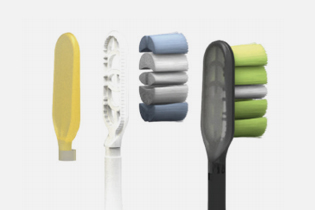
Two brushes can use the same PBT filament and feel completely different. Perceived softness comes from the whole head: filament diameter, free length, tuft density, end-rounding, and how much the neck flexes. A dense tuft field can feel firmer even with fine filaments. A long, sparse field can feel soft but wear faster.
The isometric sketch below shows the variables to lock in a golden sample. The goal is not to copy another brush. It is to define the few dimensions that control feel, cleaning access, and durability.
When a buyer says “make it softer,” the supplier should ask which lever to move. Reducing filament diameter may soften the tip feel; increasing end-rounding may reduce irritation; changing tuft density may alter both feel and cleaning performance. A manufacturer that can explain those trade-offs is easier to work with than one that only offers a catalog.
Quality Checks That Prevent Returns
Softness complaints are often really consistency complaints. A practical release plan should combine incoming material checks with finished-brush inspection. The following checks are a useful starting point:
- Filament diameter: verify against the approved tolerance with a calibrated gauge or microscope.
- End-rounding: inspect tips under magnification and keep a visual boundary sample for accept/reject decisions.
- Tuft pull force: test tufts at the start, middle, and end of a production run.
- Bristle length and tuft pattern: compare against the golden sample and check for skewed or missing tufts.
- Handle and neck strength: confirm fit, color, and flex after conditioning and drop tests.
- Packaging and labeling: check barcode, market claims, language, and shelf-life information before shipment.
ISO 20126 covers general requirements and test methods for manual toothbrushes. It is a useful reference, but buyers should still request bristle-specific data and a signed specification. A certificate alone does not prove that a particular production lot has the agreed softness.
OEM/ODM Path: From Prototype to Production
A reliable soft PBT bristle toothbrush manufacturer should be comfortable working in three stages: prototype, pilot, and mass production. The prototype proves the shape, bristle pattern, and feel. The pilot run proves tooling, tuft retention, packaging, and inspection. Mass production should then be governed by the approved sample, written specification, and a change-control process.
Ask whether the factory makes its own molds and tools. In-house mold and tooling capability shortens the feedback loop when a buyer changes the handle, brush head, or tuft hole layout. Ask also how the lab validates filament grade, color, and end-rounding. These are the details that keep a soft claim from becoming a batch-by-batch argument.
 PP/TPE Handle Soft PBT and Silicone Massage Adult ToothbrushCombines soft PBT cleaning bristles with side silicone massage bristles, offering a practical reference for sensitive-gum programs and tuft-map review.View Product →
For programs that need a combination of soft PBT cleaning bristles and silicone massage elements, the card above is a practical reference. Confirm filament diameter, tuft map, and packaging before quoting.
Manufacturer Snapshot: Buletedan
Buletedan is committed to producing and providing high-quality, affordable and innovative oral health care products. Buletedan’s mission is to serve people’s oral health. Health brings beauty and confidence. Our manufacturing factories, professional engineers, experienced employees, standardized management, and strict quality control ensure that we meet your specific requirements. Oral health care product manufacturers are undoubtedly your reliable suppliers, providing one-stop services for your next project.
Buletedan has helped thousands of companies around the world achieve the production of quality products through our professional manufacturing solutions. We do our best to help our customers exceed expectations and ultimately satisfy their customers. Buletedan is a professional floss pick, interdental brush, dental floss, and toothbrush factory. We provide customers with one-stop OEM and ODM contract manufacturing services. If you have seen brand products on shopping sites such as Amazon, eBay, TikTok, Instagram, or retail stores, those products are likely manufactured by Buletedan.
For soft PBT toothbrush projects, the relevant capabilities are in-house mold and tooling, lab support, ISO-oriented production, and experience with USA and Euro standard requirements. Product pages list “ISO Approved” and “Meet USA Standards” or “Meet Euro Standards” on selected models. Buyers should still verify the exact report, scope, and SKU before relying on those claims for a regulated market.
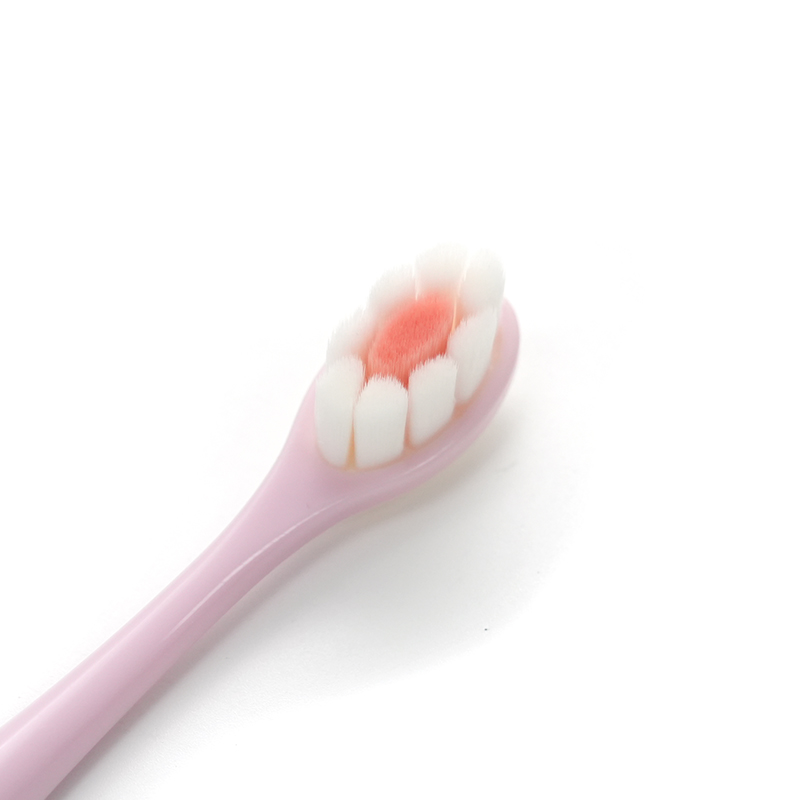 PP/TPE Handle Mini Brush Head Soft PBT Adult ToothbrushMini-head adult toothbrush with PP/TPE handle and ultra-fine soft PBT bristles, suited to quote comparisons when filament, tuft, and packaging assumptions align.View Product →
Cost, MOQ, and Lead Time: What to Clarify Early
Price comparisons go wrong when suppliers quote different assumptions. Ask every candidate to quote the same filament grade, diameter, tuft count, handle material, packaging, certification testing, and Incoterm. Clarify whether tooling is new or existing, who owns the mold, and how sampling and approval are charged. MOQ and lead time should be tied to the SKU and packaging format, not stated as a single factory-wide number.
For a soft PBT toothbrush, the biggest cost drivers are usually tooling complexity, bristle specification, handle material, and retail packaging. A simple PP handle with a standard tuft map is easier to scale than a multi-material handle with silicone elements and a custom gift box. If the project is sensitive to unit cost, ask for a value-engineering review before the design is frozen. You can contact Buletedan to discuss OEM or ODM production for toothbrushes, floss picks, interdental brushes, and dental floss.
Frequently Asked Questions
Q1. What is a soft PBT bristle toothbrush?
It is a manual toothbrush made with polyester PBT filaments and a bristle geometry designed to feel soft. Softness comes from filament diameter, length, tuft density, and end-rounding, not from the PBT name alone.
Q2. Can you customize bristle softness?
Yes. Softness can be adjusted through filament diameter, free length, tuft pattern, and end-rounding. The exact combination should be approved on a physical sample and checked across production lots.
Q3. What certifications can you provide?
Selected Buletedan product pages list ISO approval and USA or Euro standard compliance. Always ask for the exact report, test scope, and SKU coverage before using a claim in a regulated market.
Q4. What is the MOQ and lead time?
MOQ and lead time depend on the toothbrush design, tooling status, packaging format, and order quantity. Request a quote with your target specification so the factory can confirm both accurately.
Q5. Do you offer OEM and ODM services?
Yes. Buletedan provides one-stop OEM and ODM contract manufacturing for toothbrushes and other oral care products, including mold and tooling support, sampling, and production.
Q6. Can you match a reference sample?
Yes, if the sample is supported by measurable specifications. Send the reference brush, target filament diameter, tuft map, handle material, and packaging requirements so the sample can be evaluated objectively.
Your email address will not be published. Required fields are marked *

+86-515-66660899
+86 13814347707




Copyright © Buletedan
OEM/ODM/JDM Dental Floss, Interdental Brushes, Toothbrush Company
