



 中文简体
中文简体 日本語
日本語 English
 русский
 Español
 Français
 বাংলা
বাংলা 한국어
한국어 Latine
 Tiếng Việt
 عربى
عربى ไทย
ไทย Hrvatski
 dansk
dansk čeština
 Pilipino
 Nederlands
 Deutsch
 Suomalainen
 Magyar
 Indonesia
 فارسی
فارسی Bahasa Melayu
 italiano
 norsk
norsk Português
 Gaeilge
 Polskie
 Română
 svenska
 Slovák
 Türk
Türk
The Steps to Brushing Your Teeth: How to Brush Properly and Avoid Mistakes

Buletedan has helped thousands of companies around the world achieve the production of quality products through our professional manufacturing solutions.


Content
You stand at the sink, squeeze toothpaste onto your brush, and go through the motions: scrub left, scrub right, rinse, done. If that routine takes less than a minute, or if your bristles flatten within a month, you are not really brushing your teeth — you are polishing them at best and wearing them down at worst. The steps to brushing teeth correctly are simple, but almost everyone misses at least one of them.
Here is the short version: aim the bristles at a 45-degree angle toward the gum line, use short strokes, cover every surface, brush for two full minutes, spit without vigorous rinsing, and finish with interdental cleaning. Each step exists for a reason, and skipping any of them shows up in your gums later.
Why Brushing Technique Matters More Than Grit
Plaque is a sticky film of bacteria that rebuilds within hours of being removed. If it is not disturbed daily, it hardens into tartar, which brushing can no longer remove. Even people who brush twice a day can develop gum disease if their technique is poor. According to the U.S. Centers for Disease Control and Prevention (CDC), more than 47 percent of adults aged 30 and older have some form of periodontitis, and the rate climbs with age. The good news is that consistent, technique-first brushing plus interdental cleaning is one of the most effective ways to stop plaque from progressing.
A soft-bristled brush cleans the exposed surfaces well, but no bristle can reach deep into the tight space between neighboring teeth. That is why the routine below pairs brushing with a second, equally important cleaning step.
The 6 Steps to Brushing Teeth Correctly
Use this sequence every time. Once it becomes a habit, the whole routine takes about two minutes.
Step 1: Select the Right Brush and Toothpaste
Start with a soft-bristled toothbrush that fits your mouth size. Medium and hard bristles do not remove more plaque; they just abrade enamel and push the gums back. For toothpaste, choose any fluoride-containing formula backed by dental evidence; whitening, sensitivity and herbal variants are secondary choices. A pea-sized amount is enough for adults, and a grain-of-rice amount is enough for children under three.
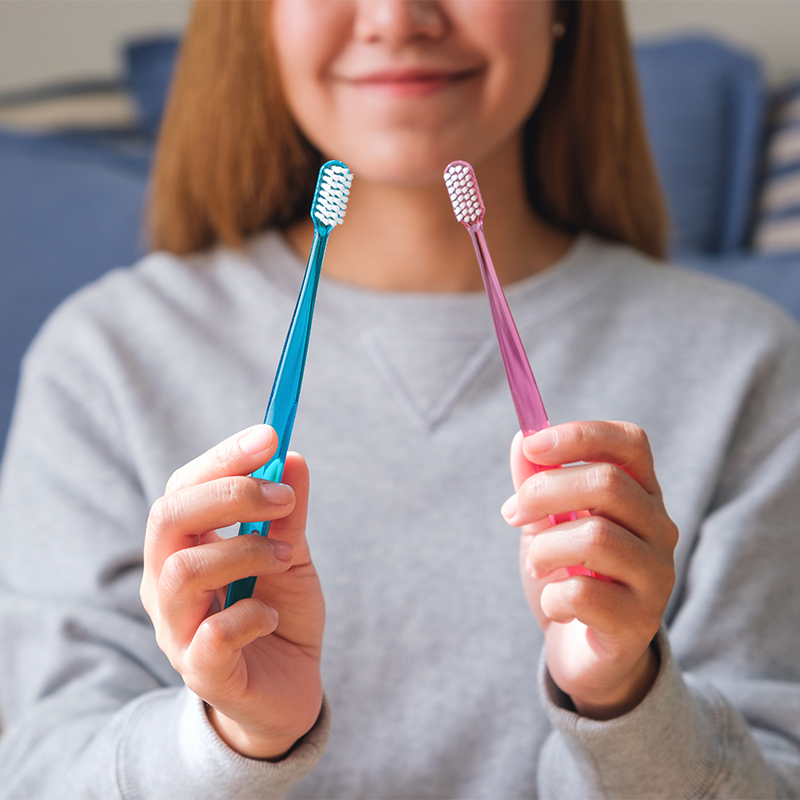 Soft Adult Toothbrush with Tapered PBT Bristles and Silicone Massage FeatureThis toothbrush uses ultra-fine tapered bristles to clean along the gumline gently, making it suitable for sensitive gums or orthodontic care. Its durable handle and antibacterial bristle coating add practical value.View Product →
Step 2: Angle the Bristles Toward the Gum Line
Hold the brush with a light grip and tilt it 45 degrees toward the gums. This angle lets the bristle tips slide gently into the gingival sulcus — the shallow crevice between tooth and gum — where plaque concentrates. A 90-degree angle cleans the flat tooth face but misses the danger zone entirely.
Step 3: Use Short, Gentle Strokes — Not Sawing
For two or three teeth at a time, make small back-and-forth or circular vibrations about one tooth width. Count to ten before moving on. Pressing hard or sawing horizontally is the most common technical error; it leaves lines on enamel and exposes dentin, which causes tooth sensitivity later on.
Step 4: Cover Every Surface
Most people brush the front of the teeth and ignore the inner surface of the lower front teeth and the chewing surfaces of the molars. To cover everything: outer surfaces at a 45-degree angle, inner surfaces with the brush nearly vertical, and chewing surfaces with the brush flat in short strokes. Do not forget the last tooth in each row.
Step 5: Brush the Tongue
After the teeth, run the bristles lightly over your tongue from back to front, or use a tongue scraper. The tongue hosts a large share of the bacteria responsible for bad breath; cleaning it takes five seconds and noticeably improves oral freshness between meals.
Step 6: Spit Without Rinsing
When the two minutes are up, spit out the foam but avoid rinsing the mouth with water. A quick water rinse washes away the fluoride that should stay on the enamel. If you need to rinse, use a fluoridated mouthwash or wait at least 15 minutes.
How the Two Minutes Should Be Spent
Divide your mouth into four quadrants: upper right, upper left, lower right and lower left. Thirty seconds per quadrant gives two minutes in total. Many electric brushes have built-in timers; with a manual brush, use a phone timer or a two-minute hourglass.
If two minutes feels long, start with the lower left quadrant instead of the front teeth. Most people find that when they focus on one quadrant at a time, the rest of the mouth gets equal attention.
Common Mistakes and How to Fix Them
These mistakes undo a lot of the effort:
- Brushing too hard. Hard pressure does not remove plaque more effectively; it damages enamel and gums.
- Horizontal sawing. This creates wedge-shaped notches at the gumline over time.
- Skipping the inner surfaces. The inside of the teeth, especially the lower front teeth, is where tartar forms fastest.
- Stopping before two minutes. Research repeatedly shows that most people brush for under one minute, which is not enough time to reach all surfaces.
- Rinsing with water immediately. This washes away fluoride and reduces the protective effect of toothpaste.
| Mistake | Why it matters | What to do instead |
|---|---|---|
| Brushing too hard | Abrades enamel, exposes dentin, causes sensitivity | Use a light grip and let bristle tips do the work |
| Horizontal sawing | Creates notches at the gumline | Use short vibratory strokes about one tooth wide |
| Skipping inner surfaces | Tartar builds fastest on the inside of lower front teeth | Tilt the brush vertically and clean each inner surface |
| Rinsing immediately | Washes away protective fluoride | Spit out foam; avoid water rinse for 15 minutes |
Brushing Alone Leaves the Job Half Done
If you only brush and never clean between your teeth, the plaque in those gaps gradually hardens. It triggers gum inflammation, cavities on the side surfaces of teeth, and persistent bad breath. Dental professionals note that brushing alone reaches about 60 percent of tooth surfaces; the remaining 40 percent lies between the teeth, below the contact point where bristles cannot enter.
Interdental cleaning tools — dental floss, floss picks, interdental brushes — are the practical solution. For tight spaces, a floss pick is often the most convenient option because it gives you control without the dexterity that string floss demands. For wider gaps, such as the spaces around orthodontic braces, interdental brushes work better. The most important factor is choosing the tool you will actually use daily.
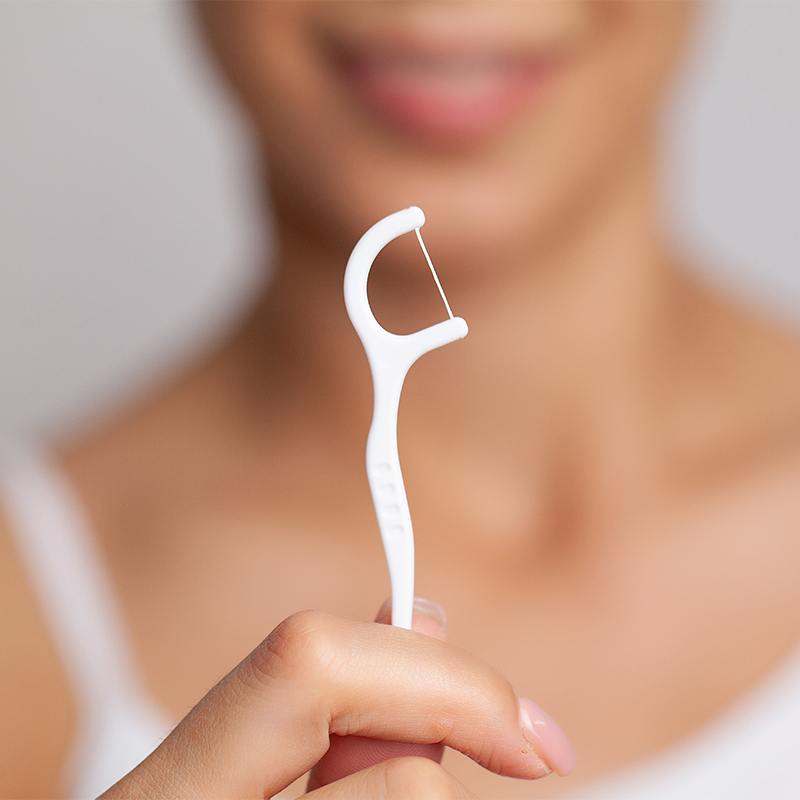 Mint-Flavored Dental Floss Pick with Durable ABS HandleA convenient interdental cleaning tool with a break-resistant ABS body and high-toughness floss, ideal for tight spaces. The mint flavor freshens breath while the design supports daily use without requiring advanced dexterity.View Product →
What to Check When Sourcing Oral Care Products
The routine above depends on the quality of the tools you put in your mouth. A brush with poor bristle retention, a floss pick that snaps under pressure, or a handle with insufficient grip is not just a product flaw — it makes people brush less, brush worse, or skip interdental cleaning entirely.
Buletedan is a professional floss pick, interdental brush, dental floss and toothbrush factory based in Jiangsu, China, providing one-stop OEM and ODM contract manufacturing services. The company pioneered the production of dental floss picks in China and has helped thousands of companies around the world bring oral care products to market. With in-house mold and tooling, a dedicated lab, and an ISO-approved manufacturing process, Buletedan supports every stage of product development. Understanding what to specify is just as important as choosing a supplier, so here are the criteria we recommend verifying before placing an order.
| Checkpoint | What to verify | Why it matters |
|---|---|---|
| Material compliance | Food-grade plastics, BPA-free, FDA and REACH declarations | Oral safety and smooth import into regulated markets |
| Bristle standard | Soft or extra-soft PBT/nylon with end-rounded tips | Protects enamel and gums; improves user comfort |
| Floss quality | Consistent thickness, break resistance, smooth glide | Prevents shredding and improves the cleaning experience |
| Certification | ISO 9001, FDA registration, product-specific test reports | Builds confidence for you and for your customers |
If you are developing a private-label toothbrush or dental floss product line, we can discuss bristle materials, handle designs, flavor formats and certification requirements. Buletedan attended the Tokyo International Gift Show 2025 to meet potential partners and is ready to support new projects from drawing to shelf. You can reach the team through the contact page to start the conversation.
Frequently Asked Questions
Q1: How long should I brush each time?
Brush for two full minutes, twice a day — about 30 seconds per quadrant. A timer helps.
Q2: Should I floss before or after brushing?
Either order works, but flossing before brushing helps fluoride reach interdental areas.
Q3: Can I brush too hard?
Yes. Excessive pressure wears away enamel and can irritate gums. Use a light touch.
Q4: When should I replace my toothbrush?
Every three months, or earlier when bristles begin to splay or after an illness.
Q5: Why do my gums bleed when I brush?
Bleeding often indicates plaque or gum inflammation. Keep brushing gently and see a dentist.
Q6: Is an electric toothbrush better than a manual one?
Most studies agree that a powered brush with soft bristles is slightly more effective at reducing plaque.
Your email address will not be published. Required fields are marked *

+86-515-66660899
+86 13814347707









Copyright © Buletedan
OEM/DOM/JDM Dental Floss, Interdental Brushes, Toothbrush Company
