



 中文简体
中文简体 日本語
日本語 English
 русский
 Español
 Français
 বাংলা
বাংলা 한국어
한국어 Latine
 Tiếng Việt
 عربى
عربى ไทย
ไทย Hrvatski
 dansk
dansk čeština
 Pilipino
 Nederlands
 Deutsch
 Suomalainen
 Magyar
 Indonesia
 فارسی
فارسی Bahasa Melayu
 italiano
 norsk
norsk Português
 Gaeilge
 Polskie
 Română
 svenska
 Slovák
 Türk
Türk
How Long to Brush Your Teeth For: The Two-Minute Rule and Why Timing Matters

Buletedan has helped thousands of companies around the world achieve the production of quality products through our professional manufacturing solutions.


Content
- 1 Why Two Minutes Is a Benchmark, Not a Slogan
- 2 What the Two Minutes Are Actually Doing
- 3 Splitting the 120 Seconds: Four Quadrants, Thirty Seconds Each
- 4 Manual or Electric: Does the Clock Change?
- 5 When Brushing Longer Starts Working Against You
- 6 Making Two Minutes Feel Shorter
- 7 The Surfaces Two Minutes of Brushing Still Miss
- 8 What This Means for Brands and Buyers
- 9 Frequently Asked Questions
Two minutes, twice a day. That is the short answer to how long you should brush your teeth, and it holds whether you use a manual brush, an electric brush, or one with a timer built into the handle.
Two other numbers matter just as much. Most adults brush for only 30 to 45 seconds, according to patient-timing observations reported by dental clinics. And brushing longer than two minutes does not add protection — past a point, it starts removing enamel and gum tissue instead of plaque.
Why Two Minutes Is a Benchmark, Not a Slogan
The two-minute figure is a practical minimum rather than a laboratory constant. For most adults with normal hand control, it is roughly the time needed to reach every accessible surface of every tooth at least once, and to leave fluoride toothpaste in contact with the enamel long enough to matter.
That second part is easy to underestimate. Fluoride supports the repair of early enamel damage only while it is sitting against the tooth. A 30-second pass followed by a fast rinse does not give it that window. A full two minutes does.
The distance between the recommendation and real behaviour is where most problems begin.
Brushing time: recommendation versus reported habit
Timing studies reported by dental practices place the average adult session well below the recommended two minutes.
At 30 to 45 seconds, the surfaces people reach first get cleaned — the front teeth and the biting edges of the premolars. The back molars, the gumline, and the inner surfaces of the lower teeth are skipped almost every time, and those are exactly the places where decay and gum inflammation most often start.
What the Two Minutes Are Actually Doing
Plaque is a biofilm, not a stain. It starts reforming within minutes of brushing, and if it is left undisturbed it matures over roughly 24 to 48 hours into a mineralised layer that a toothbrush cannot remove. Brushing twice a day at roughly 12-hour intervals interrupts that cycle while the deposit is still soft.
Illustrative schematic: plaque re-formation between brushings
Schematic of biofilm maturation, based on general dental microbiology. Soft plaque is removable; mature mineralised deposits are not.
Two conclusions follow from that curve. First, frequency matters as much as duration: two minutes once a day leaves plaque undisturbed for a full day, right at the edge of the maturation window, while two minutes twice a day keeps it comfortably inside it. Second, pressure does not speed up the removal of soft plaque — it only adds wear to enamel and gum tissue.
Splitting the 120 Seconds: Four Quadrants, Thirty Seconds Each
The simplest way to spend two minutes evenly is to divide the mouth into four quadrants and give each one about 30 seconds. Most electric brushes with a quadrant pacer work exactly this way, buzzing every half minute; a manual brush works the same way if you keep a clock or phone timer in view.
Quadrant structure of a two-minute session
Quadrant order: 1 upper right, 2 upper left, 3 lower right, 4 lower left.
Inside each 30-second block, technique decides how much of that time is useful:
- Angle the brush about 45 degrees to the gumline so the bristles reach the shallow groove where tooth meets gum.
- Use short, gentle strokes across one or two teeth at a time instead of wide circular scrubbing.
- Cover three surfaces per tooth: outside, inside, and chewing surface.
- Finish on the inner surfaces of the front teeth, holding the brush vertically.
Soft bristles are not a compromise. Medium and hard bristles remove no more plaque in two minutes, but they do remove more gum tissue over months of use.
Manual or Electric: Does the Clock Change?
No. The two-minute target is identical for both. What differs is how easily each one gets you there, and how much of the result depends on your own technique.
| Consideration | Manual toothbrush | Electric toothbrush |
|---|---|---|
| Recommended time per session | 2 minutes | 2 minutes |
| Built-in timer | Rare; an outside timer is needed | Standard on most models, often with a 30-second quadrant pulse |
| Pressure feedback | None | Common; usually alerts when you press too hard |
| Dependence on technique | High | Lower |
| Typical cost | Low | Higher upfront, plus replacement heads |
| Often recommended for | People with steady hands and settled habits | People who rush, wear braces, or have limited dexterity |
If you already brush gently and completely for a full two minutes, an electric brush mainly adds convenience. If you consistently finish in under a minute, a model with a 30-second quadrant pacer is one of the more reliable ways to change that, because the cue sits in the handle rather than depending on willpower.
When Brushing Longer Starts Working Against You
Three or four minutes is not "extra clean". Once the accessible surfaces have been covered, the additional time mostly abrades. Three signs appear early:
- A gumline that recedes and exposes the darker root surface at the neck of the tooth.
- Wedge-shaped notches worn into the tooth where the brush habitually starts.
- Sharp sensitivity to cold, which usually follows enamel loss.
The riskiest combination is a hard-bristled brush, an abrasive toothpaste, and a long session with heavy pressure. Any one of those is manageable; all three together wear enamel quickly. Timing around meals matters too — after acidic food or drink, enamel is temporarily softened, and dental guidance generally suggests waiting about 30 minutes before brushing.
Making Two Minutes Feel Shorter
Two minutes only feels long when there is nothing to measure it against. Practical ways to lock it in:
- Use a brush with a built-in quadrant timer, or leave a phone timer face-up on the sink.
- Play a two-minute song you know by heart and stop when it ends.
- Start in a different quadrant each session, so the one you usually rush gets the freshest attention.
- Replace the brush every three months, or sooner if the bristles splay outward — splayed bristles clean less in the same two minutes.
- Do not rinse with mouthwash immediately afterwards; it washes away the fluoride you just spent two minutes applying.
For brands specifying products around this routine, the first specification to settle is bristle diameter: ultrafine soft PBT bristles at a uniform trim height, on a head small enough to reach the last molar without forcing the jaw open.
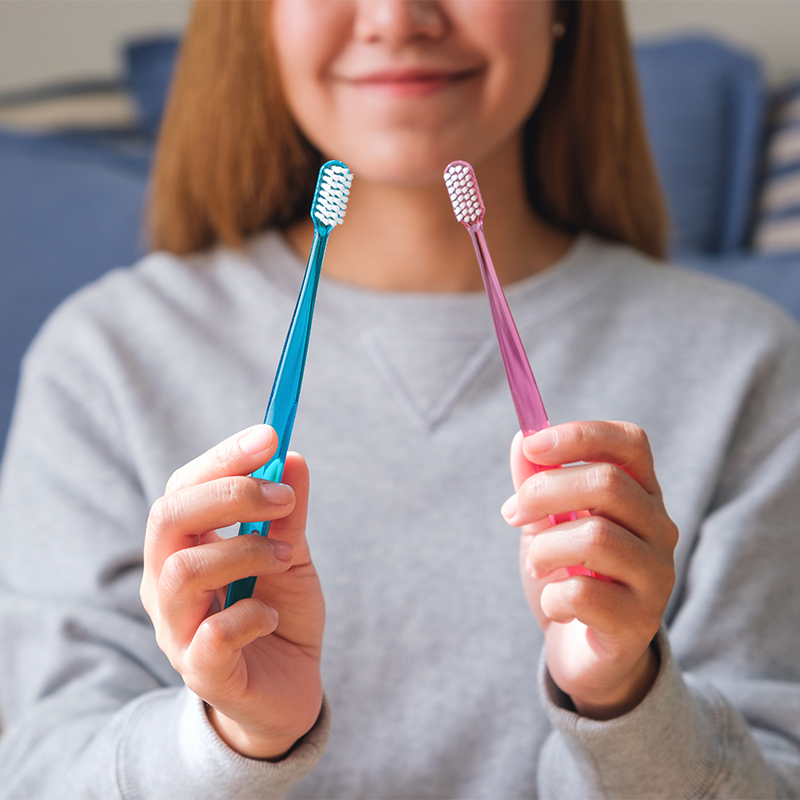 PP Handle Ultra-fine Soft PBT Bristle Adult Deep Cleaning ToothbrushAdult toothbrush with 0.18 mm soft PBT bristles, 19 cm anti-slip PP handle, and a compact head for daily deep cleaning.View Product →
The Surfaces Two Minutes of Brushing Still Miss
A toothbrush reaches the outside, the inside, and the chewing surface of each tooth. It does not reach the tight contact between neighbouring teeth — a space that accounts for a substantial share of total tooth surface, commonly cited in dental education as roughly 40 percent. Brushing for two minutes and stopping there leaves that gap untouched.
Interdental cleaning once a day, ideally at night before brushing, closes it. The right tool depends on the space:
- Tight contacts and healthy gums: dental floss or a floss pick with PTFE or UHMWPE tape.
- Visible gaps, bridges, implants, or braces: an interdental brush sized to the gap, used without forcing.
- Limited dexterity or a strong gag reflex: a handled floss pick, which reaches the back teeth one-handed.
If you want a plain-language walkthrough of how these tools differ, our guide on how interdental brushes work covers sizing and materials.
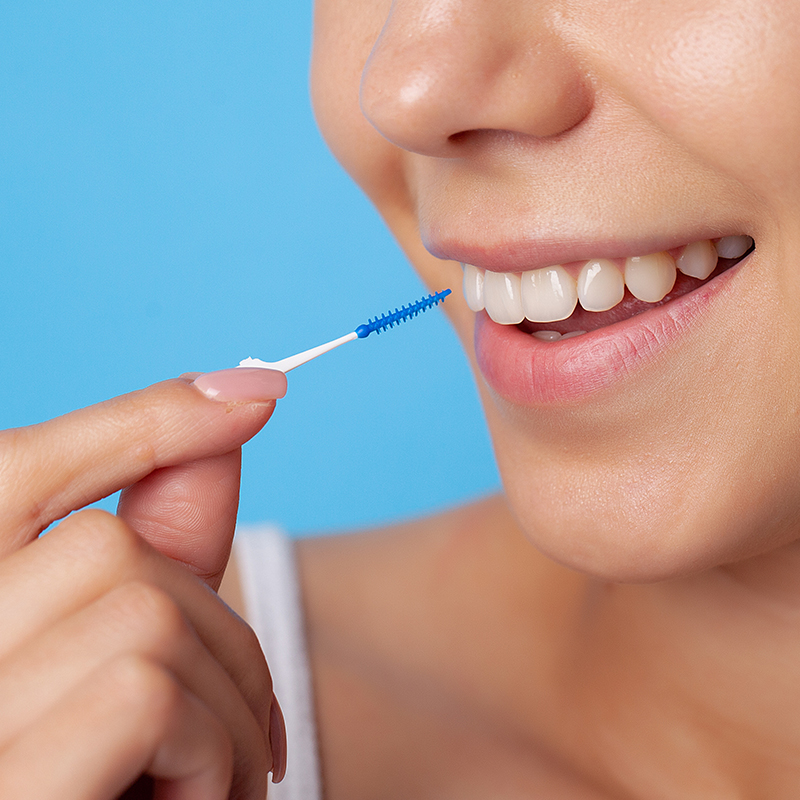 Eco-Friendly Soft TPE Bristle I-Shape Interdental BrushReusable I-shaped interdental brush with soft TPE bristles, 360° cleaning, and customizable PP handle for between-teeth and gum-line care.View Product →
What This Means for Brands and Buyers
For anyone specifying oral care products for retail, the two-minute rule translates into a short list of design priorities: soft, uniformly trimmed bristles; a head small enough to reach the last molar; and a handle that keeps pressure light even when a user brushes longer than they should.
Buletedan is committed to producing and providing high-quality, affordable and innovative oral health care products. Buletedan's mission is to serve people's oral health. Health brings beauty and confidence. Our manufacturing factories, professional engineers, experienced employees, standardized management, and strict quality control ensure that we meet your specific requirements. Oral health care product manufacturers are undoubtedly your reliable suppliers, providing one-stop services for your next project.
Buletedan has helped thousands of companies around the world achieve the production of quality products through our professional manufacturing solutions. We do our best to help our customers exceed expectations and ultimately satisfy their customers. Buletedan is a professional floss pick, interdental brushes, dental floss, toothbrush factory. We provide customers with one-stop OEM and ODM contract manufacturing services. If you have seen the following brand products on shopping sites such as Amazon, eBay, TikTok, Instagram, or retail stores, then these products are likely manufactured by Buletedan.
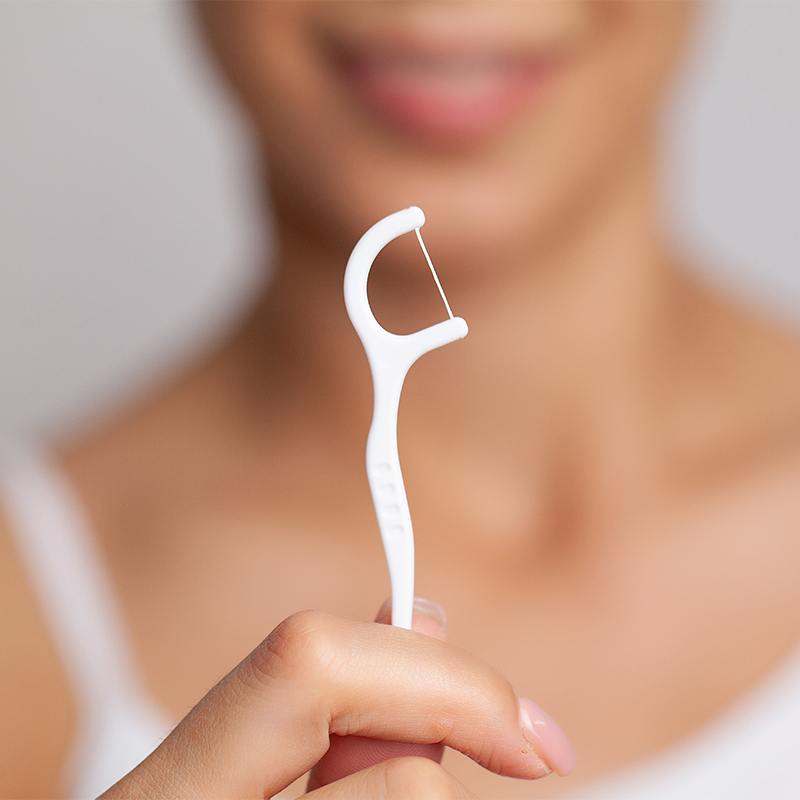 ISO Approved Mint Flavor Dental Floss Pick with ABS ToothpickDaily floss pick with high-toughness floss, mint flavor, and ABS handle; customizable materials and packaging for retail oral-care ranges.View Product →
Programs that combine a toothbrush, an interdental brush, and a floss pick in a single range usually start with a prototype. To discuss materials, tooling, or certification requirements for your next project, contact our team.
Frequently Asked Questions
Q1. Is two minutes still necessary with an electric toothbrush?
Yes. The timer is a tool for reaching two minutes, not a reason to shorten it. Most electric brushes are built around a two-minute cycle with a 30-second quadrant pulse.
Q2. Can I brush for one minute if I brush harder?
No. Pressure removes soft plaque no faster than light strokes, but it does wear enamel and irritate the gum margin. You would trade a small time saving for lasting damage.
Q3. Should children brush for two minutes as well?
Yes, twice a day. Most children still need help or supervision until around age seven or eight, when their hand control is good enough to reach the back teeth alone.
Q4. Is it harmful to brush for five minutes?
Occasionally, no. As a daily habit, yes — the extra time adds abrasion rather than cleaning, especially with hard bristles or a highly abrasive toothpaste.
Q5. Should I brush straight after breakfast?
If breakfast included something acidic, such as citrus, juice, or soda, wait about 30 minutes. Otherwise brushing before breakfast is fine and often easier to keep as a habit.
Q6. How do I know if I am brushing too hard?
Bristles that splay within a few weeks, a receding gumline, or new sensitivity to cold are the usual signs. A brush with pressure feedback removes the guesswork.
Your email address will not be published. Required fields are marked *

+86-515-66660899
+86 13814347707







Copyright © Buletedan
OEM/DOM/JDM Dental Floss, Interdental Brushes, Toothbrush Company
